Customer satisfaction surveys: Tips, templates, and examples
Build clear, effective customer satisfaction surveys with expert-written questions, templates, and examples. Measure customer experience, understand what drives satisfaction, and take action with confidence.

Customer satisfaction surveys measure how satisfied customers are with a specific experience and help you understand what drives that satisfaction. A well-designed customer satisfaction survey does more than collect customer feedback. It shows customers that you’re listening, strengthens trust, and gives you the data you need to improve their experience across every touchpoint.
In this comprehensive guide, you will learn how to craft clear customer satisfaction surveys, choose the most effective questions, interpret your results accurately, and turn your analysis into tangible action.
What is a customer satisfaction survey?
A customer satisfaction survey measures how satisfied customers feel with a product, service, or experience. It captures customer satisfaction at key moments, giving you a clear read on service quality, product satisfaction, and overall customer experience.
Customer satisfaction surveys are a core part of a Voice of the Customer (VoC) program, revealing where to improve and how changes in product, support, or operations affect real customer experiences. Common uses include post-purchase feedback, support follow-ups, and onboarding assessments—any moment where transactional feedback validates performance.
Most surveys include a Customer Satisfaction Score (CSAT) question, asking customers to rate their experience on a five- or seven-point scale to gauge overall satisfaction.

To calculate your CSAT, record how many customers selected the top satisfaction ratings (such as 4 or 5 on a 5-point scale), divide that number by total responses, and multiply by 100 to get the percentage of satisfied customers.
This score works alongside loyalty metrics like Net Promoter Score (NPS®) and effort metrics like Customer Effort Score (CES) to give you a full picture of customer experience. You can also reference the American Customer Satisfaction Index (ACSI) for directional benchmarking while tracking their own results over time.
By consistently gathering CSAT feedback, you can prepare a clear action plan to improve your score. Stronger satisfaction often leads to lower churn, better retention, and healthier revenue as customer relationships strengthen over time.
Why customer satisfaction surveys are important
Customer satisfaction surveys are important because they reveal what drives loyalty, retention, and the overall customer experience. They show how well your product or service meets customer needs and highlight where to focus to improve satisfaction.
A strong customer experience directly influences outcomes. After a positive experience, 91% of customers are likely to recommend a company. When the experience falls short, 89% of CX pros believe it is the leading contributor to customer churn. By understanding the factors contributing to great customer satisfaction, you can build better customer experiences. Considering every company will have different strengths and weaknesses regarding these improvements, it’s always a good idea to launch personalized surveys to your customers.
How to create a customer satisfaction survey
A well-designed customer satisfaction survey starts with a clear goal. Before choosing questions, define what you want to learn, whether its overall customer satisfaction, perceptions of value, or feedback on a recent purchase or support interaction. Your survey goal shapes the questions you include and ensures the results are easy to interpret and act on.
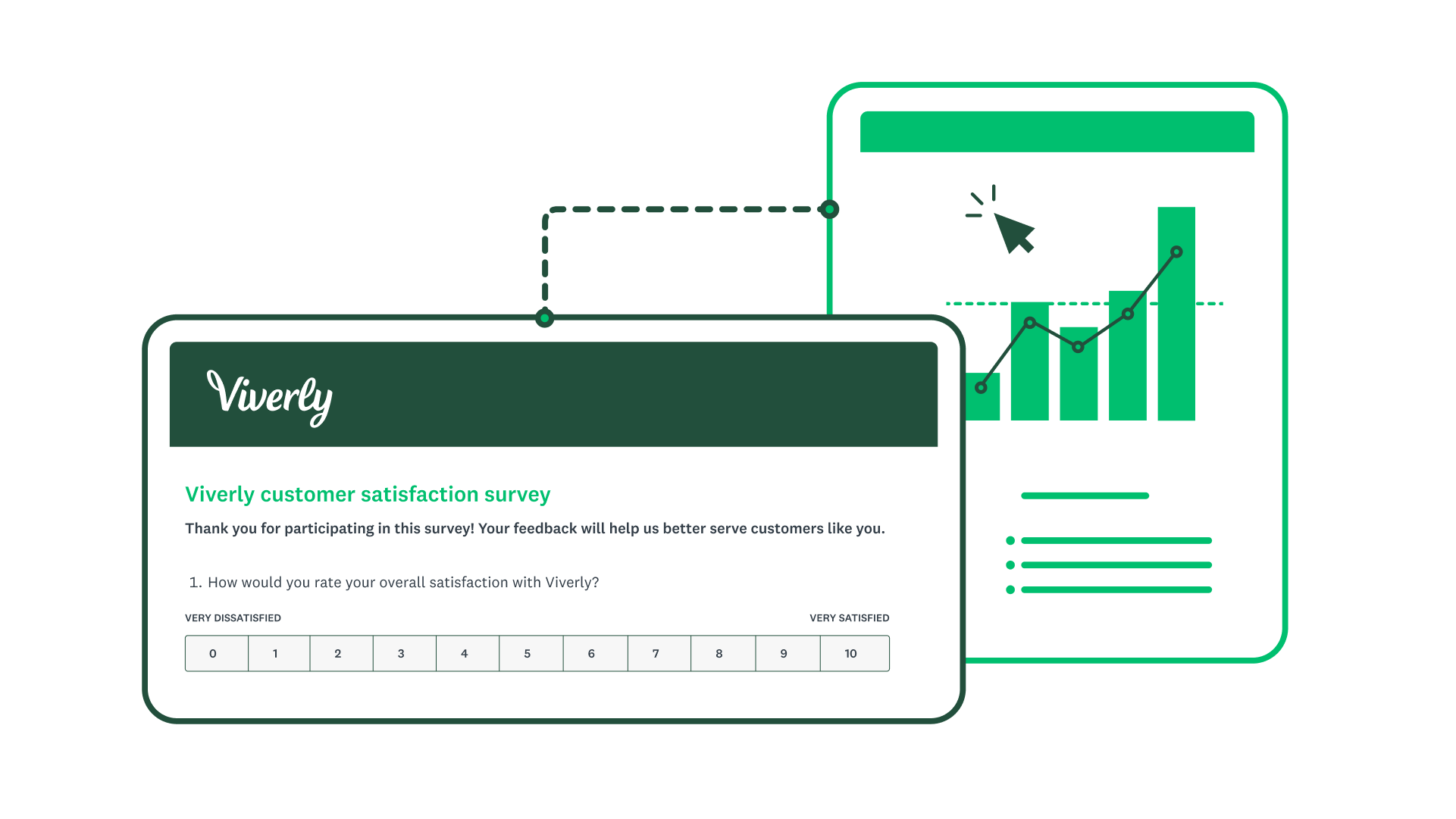
To build an effective customer satisfaction survey, follow these steps:
1. Identify the experience you want to measure
Decide where you want feedback: pricing, product value, the purchase experience, or customer service. Keeping the scope focused helps respondents give accurate, helpful answers.
2. Choose the right CSAT question
Most customer satisfaction surveys include a core CSAT item such as “What is your overall satisfaction with [company/product/service]?” Customers rate their experience on a five- or seven-point scale, which you can track over time to understand how satisfaction changes.
3. Add diagnostic questions that explain the score
Use follow-up questions to understand why customers rated their experience the way they did. For example, to assess pricing and value, you might ask:
- How satisfied are you with the pricing of our service?
- How satisfied are you with the product you received in exchange for the price you paid?
- Do you believe that our product offers good value for the money?
To measure overall customer satisfaction, you can ask:
- What would you suggest to help us improve our product?
- Please rate your overall satisfaction with our company.
- On a scale of 1 to 10, how satisfied are you with our service?
For customer service satisfaction, you might include:
- How would you rate your satisfaction with the communication you received from our customer support department?
- Did we manage to resolve your issue to your satisfaction?
- Please rate the helpfulness of our customer service representatives on a scale of 1 to 10.
4. Keep the survey short, clear, and inclusive
Limit the core survey to three to five questions, use plain global English, and focus each question on a single topic. Avoid jargon and culture-specific language so the survey is easy for everyone to understand.
5. Send the survey at the right moment
Timing affects accuracy. Send the survey soon after the experience—such as right after a purchase, a support interaction, or an onboarding milestone—so responses reflect what customers clearly remember.
Once your questions are ready, customize a customer satisfaction survey template to match your goals and audience. A tailored template helps you gather reliable, consistent feedback you can use to improve customer satisfaction over time.
Customer satisfaction survey question types (with examples)
Choosing the right customer satisfaction survey questions helps you collect clear, actionable feedback. Each question type gives you different insight into customer satisfaction, customer experience, service quality, or product sentiment. Use the guide below to understand when each format works best, see sample questions, and learn how to analyze the results.
Related reading: Survey question types explained
1. Likert scale questions
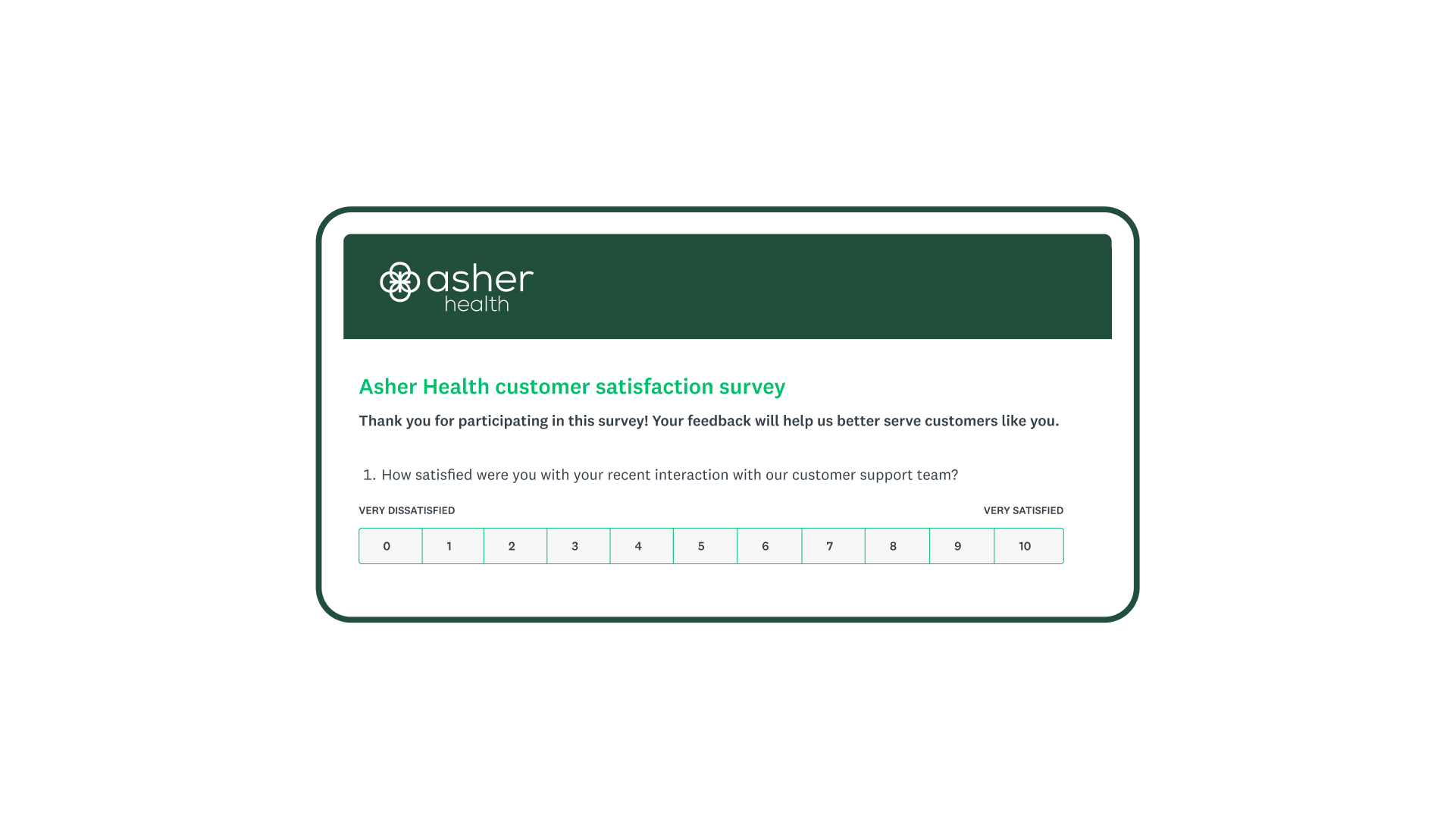
Likert scale questions measure satisfaction, agreement, and frequency using a 5- or 7-point scale. This format gives customers more nuance than a simple yes/no response and is one of the most common structures for CSAT surveys.
Best used for:
- Measuring overall customer satisfaction
- Rating a recent experience
- Evaluating support interactions
Tracking changes over time
Example questions:
- Overall, how satisfied or dissatisfied are you with our company?
- Rate your level of agreement with the statement: “The customer service team met your expectations.”
- How likely are you to recommend our company’s products based on your overall satisfaction?
You can also use frequency scales (Never → Rarely → Sometimes → Often → Frequently) to understand how often customers use a feature or channel.
How to analyze it:
Report the percentage of respondents selecting the top satisfaction ratings, compare results by segment, and monitor shifts after product or service changes.
2. Open-ended questions
Open-ended questions let customers answer in their own words, providing context, explanations, and new ideas you may not get from closed-ended formats. They pair well with CSAT items to explain why a customer gave a particular score.
Best used for:
- Understanding customer expectations
- Identifying friction points
- Collecting improvement suggestions
- Adding qualitative insight to quantitative data
Example questions:
- What do you like most about our new product?
- What changes would most improve our product?
- What changes would most improve competing products currently available?
These example questions appear in our Market Research Survey Template.
How to analyze it:
Categorize responses into themes, tag sentiment, and look for patterns that appear alongside low or high satisfaction scores. Open-ended data can reveal the “why” behind customer behavior.
3. Nominal questions (multiple choice)
Nominal questions help you categorize respondents into groups. They don’t carry numerical meaning, but they add essential context to customer satisfaction survey results.
Best used for:
- Preference questions
- Behavioral segments
- Feature adoption patterns
- Understanding customer demographics or choices
Example questions:
- What brands of shoes from our online store do you prefer?
- Which social media platform do you use most to connect with friends?
- What is your preferred method of transportation during your daily commute?
How to analyze it:
Use nominal responses to segment satisfaction data, compare CSAT across groups, and identify which customer types experience more friction or delight.
4. Binary (yes/no) questions
Binary questions keep the format simple and fast. With only two response options, customers can answer quickly, and you get clear, quantifiable insights.
Best used for:
- Quick checks on satisfaction
- Measuring task completion
- Evaluating service outcomes
- Identifying blockers or missed expectations
Example questions:
- Did you find the products you were looking for on our website? Yes / No
- Were you satisfied with the delivery condition of your recent order? Yes / No
- Did you experience any technical difficulties on our website? Yes / No
How to analyze it:
Binary responses make it easy to identify gaps in service quality. High “no” responses signal specific steps where customers are getting stuck or dissatisfied.
Get tips on writing good survey questions.
5. Usage frequency questions
Frequency questions measure how often customers use your product, visit a store, or engage with a feature. These patterns help explain satisfaction scores and uncover opportunities for personalization.
Best used for:
- Tracking product or feature usage
- Segmenting by engagement level
- Understanding customer routines
- Supporting product roadmap or marketing decisions
Example questions:
- How often do you use Built-Rite tools? Every day, several days each week, a few times a month, occasionally, rarely
- How often do you visit our local store? Every day, several days each week, once a week, once a month
- How frequently do you use our mobile app? Multiple times a day, once a day, a few times a week, once a week, rarely or never
How to analyze it:
Compare how often customers use something with how satisfied they feel. High-frequency customers may reveal feature gaps, while low-frequency users can highlight onboarding or adoption challenges.
Related reading: Survey best practices
How to write customer satisfaction survey questions that people actually answer
Clear, focused questions make your customer satisfaction surveys easier to finish and more reliable to analyze. Strong wording increases response rates, reduces bias, and helps you understand what customers actually experienced.
These CSAT question best practices will help you write questions that customers can answer quickly and confidently.
1. Keep questions short, clear, and specific
Plain language helps respondents stay engaged. Each question should ask about one idea at a time and use terms everyone can understand.
Before: “How satisfied are you with everything about your order today?”
After: “How satisfied were you with the quality of your order today?”
2. Avoid double-barreled questions
A double-barreled question forces customers to answer two topics at once, making results harder to interpret.
Before: “How satisfied are you with our app’s reliability and customer service?”
After:
- “How satisfied are you with our app’s reliability?”
- “How satisfied are you with our customer service?”
3. Personalize where it helps, but keep it simple
Personalization can improve response rates when used thoughtfully. This might include using the customer’s first name or referencing a specific interaction in your survey introduction. Keep the language warm, clear, and inclusive to ensure every customer can respond comfortably.
4. Send surveys at the right moment
People respond more accurately when the experience is fresh. Send customer satisfaction surveys right after a key interaction—such as a purchase or support conversation—so customers can recall details clearly.
If you manage surveys across multiple channels, consider using in-app or on-site surveys to capture feedback in real time.
5. Keep your CSAT survey short
Three to five questions is usually enough to measure satisfaction, gather context, and uncover improvement opportunities. Shorter surveys improve customer satisfaction survey completion rates and give you cleaner data for analysis.
6. Use open-ended questions sparingly and intentionally
Open-ended items help you understand why customers feel a certain way. They work best as follow-ups to CSAT or diagnostic questions.
Before: “Please share any comments, concerns, or complaints about your entire experience.”
After: “What could we have done to improve your experience today?”
7. Integrate survey data into your CRM
Connecting surveys to your CRM gives you a complete, real-time view of each customer. With SurveyMonkey integrations, you can automatically sync satisfaction scores, comments, and case details into platforms like Salesforce or HubSpot. Explore our full set of CRM integrations to streamline follow-up and personalize service.
If you want a deeper dive into building a feedback strategy, read our ultimate guide to customer feedback programs.
8. Start with proven wording and templates
If you’re unsure how to begin, start with expert-written items. Our customer satisfaction survey templates give you ready-to-use CSAT questions, and the Question Bank helps you choose clear, unbiased wording that increases the quality of your responses. You can also access benchmarks to understand how your results compare to others in your sector.
How to measure and analyze customer satisfaction survey results
To analyze your customer satisfaction data effectively, you must move beyond the final score. Begin with your Customer Satisfaction Score and then use supporting feedback, patterns, and trends to understand what truly drives satisfaction. A structured approach is key to turning raw data into insights you can act on immediately.
1. Calculate your CSAT score
CSAT scoring is straightforward: Count how many respondents selected the top satisfaction ratings (typically the top two points on a five- or seven-point scale), divide by the total number of responses, and multiply by 100.
While a "good" CSAT score varies by industry, the most valuable focus is internal improvement over time. Use broad external references like the American Customer Satisfaction Index (ACSI) only as directional context, not as a definitive goal.
2. Interpret the "why" with open-ended responses
The open-ended responses are essential for interpreting the why behind the score. These comments often reveal what customers genuinely appreciated, what created friction, and what they expected but didn’t receive. Reviewing these qualitative themes alongside your CSAT score gives you a fuller, richer picture of experience quality.
3. Tag themes for actionable insight
Tagging themes is the simplest way to transform qualitative feedback into structured, trackable insights. Use labels like “speed,” “clarity,” or “product quality.” This makes it easy to:
- Track patterns and spot emerging issues.
- Summarize findings for your team.
- Connect satisfaction changes to specific parts of your product or service.
4. Segment results for deeper clarity
Segmentation adds a crucial layer of clarity. By comparing results across channel, region, customer type, or journey stage, you can quickly see whether certain groups are more satisfied or encountering more friction. For instance, you might find higher satisfaction among returning buyers or lower scores for a specific support channel. This level of detail helps you prioritize improvements that deliver the most impact.
5. Use dashboards to monitor trends
Dashboards and reporting features are vital for monitoring trends over time. Visualizing shifts in CSAT, comment themes, and response rates helps you understand whether recent changes are working and clearly highlights where to focus next. Tracking these metrics regularly ensures your customer experience improvements are informed by reliable, up-to-date insights.
Improve customer satisfaction with SurveyMonkey
With SurveyMonkey, you can build customer satisfaction surveys that are clear, scalable, and connected to your workflows. Expert-written CSAT questions, customizable templates, and AI-assisted features help you collect reliable customer satisfaction data and turn it into insights your teams can use.
Start with the Customer Satisfaction Survey Template or browse our full catalog of survey templates to launch faster. You can also explore survey best practices to sharpen your approach and build surveys with strong response rates, clear wording, and consistent analysis.
When you are ready to act on your results, use our dashboards, integrations, and automated features to bring CSAT scores and comment themes into the systems your teams already use. Get started free to measure satisfaction, understand what drives the customer experience, and make improvements grounded in feedback.
NPS, Net Promoter & Net Promoter Score are registered trademarks of Satmetrix Systems, Inc., Bain & Company and Fred Reichheld.
Discover more resources

Solutions for your role
SurveyMonkey can help you do your job better. Discover how to make a bigger impact with winning strategies, products, experiences, and more.

Why are surveys important in research?
Surveys are important in research because they offer a flexible and dependable method of gathering crucial data. Learn more today.

NPS surveys: Best practices for high response rates
Learn NPS survey best practices to drive high response rates by improving survey processes.

23 ways to increase CSAT response rates
It's hard to improve your customer satisfaction scores without respondents. Get SurveyMonkey's best actionable tips to improve your response rate.