Before you ask a customer for a referral or a public testimonial, you need to know who will say yes. A customer advocacy survey tells you, so your team spends its time on the customers most likely to champion you. A customer advocacy survey identifies which customers are loyal enough to recommend, refer, or endorse your brand, so you can build a referral and testimonial pipeline around your strongest voices. These 11 templates give you a tested place to start, including purpose-built testimonial and customer story layouts.
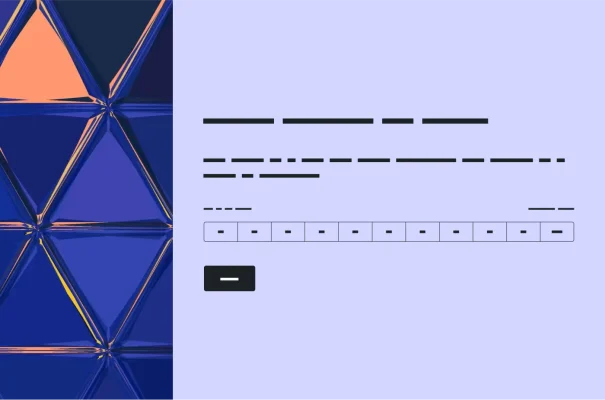
Most advocacy surveys lead with a Net Promoter Score (NPS) question, which asks how likely a customer is to recommend you on a 0 to 10 scale, followed by one open-ended "why." Sentiment analysis then tags each reply as positive, negative, or neutral, so you sort promoters from passives and detractors without reading every response by hand. The open-ended answers are where advocacy language lives: customers who name a specific outcome or say they already tell colleagues are your best referral candidates.
You send these surveys to your own customers, by email, web link, or embedded form, and reminders lift response rates on email sends. Templates in this category complete at a 93.6% average rate across about eight questions. Built-in integrations route high scorers into a referral or testimonial workflow in your CRM, so a strong signal does not stall in a spreadsheet.
How to create a customer advocacy survey
Start from one of the 11 templates here, or open the customer experience survey template as a base.
Add a Net Promoter Score question to measure likelihood to recommend on the 0 to 10 scale.
Add one open-ended follow-up asking customers to explain their score in their own words.
Apply your branding and colors so the survey reads as part of the relationship.
Choose how you collect: send by email after a success milestone, share a web link in a post-project follow-up, or embed a form in your product.
Launch, then review results with sentiment analysis to surface advocacy language and dashboards to track the NPS trend by segment over time.
When to use customer advocacy surveys
After a successful project or milestone: This is the highest-signal moment, since customers who just hit a goal with your product are the most willing to recommend it. Send within a day or two of the win.
After a positive support resolution: A customer whose problem was solved fast is a strong candidate, so trigger the survey right after the case closes while the experience is fresh.
Before a case study or testimonial request: Survey first to confirm sentiment and capture quotable language in writing, so you learn whether to ask and get usable material at once.
After a positive NPS response: Use the open-ended follow-up to find customers who already describe your product the way prospects would want to hear it.
On an ongoing program cadence: Run a short quarterly pulse for enrolled advocates to refresh testimonials and flag anyone whose sentiment has cooled. The customer experience role page shows how CX teams keep that rhythm.
Who runs customer advocacy surveys
Customer experience managers: They own the full journey and use advocacy surveys to find the touchpoints that create the strongest promoters.
Customer marketing and advocacy program managers: They source reference customers, run testimonial libraries, and build co-marketing programs, and these surveys feed that pipeline.
Customer success managers: They use NPS and the open-ended follow-up to flag high-health accounts and surface referral openings before they fade.
B2B marketing teams: They need referenceable customers for sales cycles and run advocacy surveys to identify and qualify candidates before outreach.
Tips for creating a customer advocacy survey
Keep it to a question or two: Surveys of 1-10 questions complete at 98.2% here, against 64.2% past 21, so one NPS question plus one follow-up is plenty to spot an advocate.
Lead with the recommend question: Asking likelihood-to-recommend first captures the advocacy signal before attention drifts, with the open-ended "why" second.
Time it to a success moment: Advocacy intent peaks right after a win, a support resolution, or a feature milestone, and waiting a week dulls it.
Route high scorers automatically: Connect the survey to your CRM so customers who score nine or 10 on the Net Promoter Score scale flow into a referral or testimonial workflow without manual sorting.
Frequently asked questions about customer advocacy surveys
What KPIs should I track in a customer advocacy program?
Lead with Net Promoter Score, which scores likelihood to recommend on a 0 to 10 scale and gives you a number to trend. Around it, track referral conversion rate, testimonial yield, and the share of promoters in your base. Referral conversion counts how many advocates refer; testimonial yield counts those who give a usable quote. SurveyMonkey dashboards show the NPS trend by segment, so you can see which cohorts produce the most advocates.
How do I measure customer advocacy?
The most direct measure is a likelihood-to-recommend question, the NPS question type built into SurveyMonkey. Customers answer on the 0 to 10 scale, and nines and 10s are promoters. Add one open-ended follow-up and let sentiment analysis tag the language automatically. For richer reads, pair NPS with a customer testimonials survey in the same send to capture specific outcomes and quotable phrasing alongside the score.
What is a good NPS score for customer advocacy?
Higher is better: nines and 10s are promoters, sevens and eights are passive, and zero through six are detractors. An NPS of 50 or above is generally strong, though benchmarks vary by sector. More useful than a single target is your own direction, so watch whether the score rises or falls after changes to your product or support. The dashboard shows that trend across time and segment so you can read the shift, not just the snapshot.
How do I get more customers to complete an advocacy survey?
Keep it short. Surveys of 1-10 questions complete at 98.2% here, while those past 21 drop to 64.2%. Ask the NPS question and one follow-up, then stop. Send right after a success milestone when motivation peaks, and use reminders to nudge non-responders. The survey score predicts completion before you send, and AI response-quality filtering removes gibberish and rushed answers so your promoter list stays clean.
What questions should I include in a customer advocacy survey?
Open with the NPS question, "How likely are you to recommend [company] to a colleague or friend?" on the 0 to 10 scale. Follow with one open-ended question, "What is the main reason for your score?" That pair captures both the signal and the language. If you are gathering testimonials, add a question asking the customer to describe a specific outcome. The customer testimonials template in this category already follows that structure.