Every survey tells a story. And when millions of them move through SurveyMonkey each year, those stories become trends, revealing what’s top of mind for businesses around the world.
In a time defined by unpredictable tariff policies, deep political and cultural divides, and rapid advances in AI, this data offers a glimpse into how companies are strategizing and staying agile. By analyzing the millions of surveys conducted by more than 250,000 organizations worldwide—including trending templates, keywords, and survey topics—our research team identified how companies plan to grow revenue, improve efficiency, and mitigate risk in 2026.
Across every trend, one truth stands out: when the world changes quickly, the smartest organizations ask more, not less.
Here’s what you need to know about what’ll define business in 2026, including tools and templates that can help you get ahead.
Trend 1: Cultural polarization grows.
Insights become brand armor.

We live in a hyper-connected world where brand perception can swing overnight—and it’s vital to not just keep up but stay ahead. Just look at what happened with American Eagle’s “Great Jeans” campaign and Cracker Barrel’s logo refresh. Or Lyft’s abandoned pilot feature that allowed drivers to see a passenger’s tipping history before they accepted a ride.
While it’s a sure bet that none of these brands launched their 2025 ideas on a whim, each moment is a sign of the times.
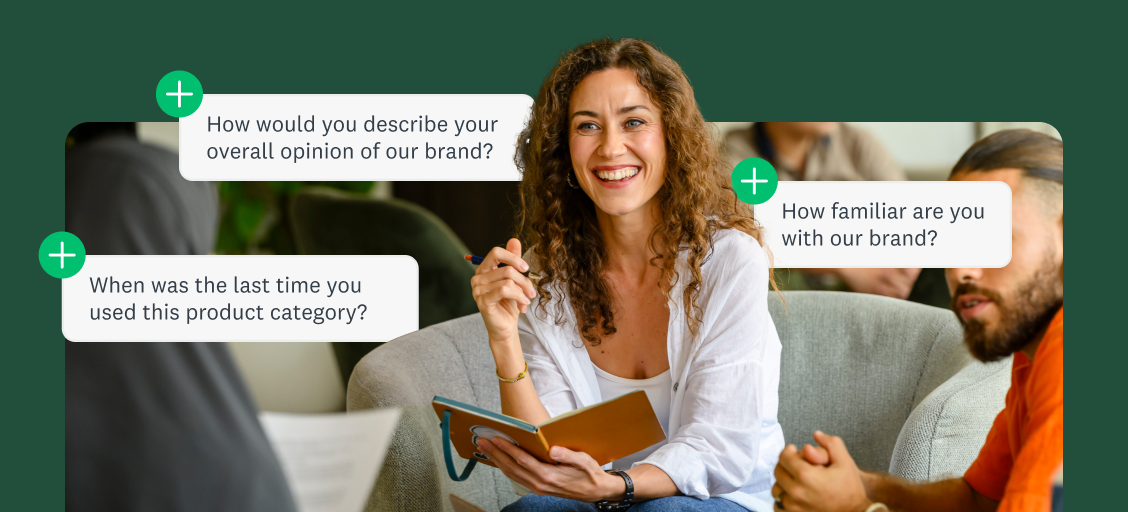
Our data shows brands have been busy tracking their health and testing ideas ahead of the news cycle. Brand-related template use increased year over year in 2025, including Brand Attributes (+167%), Brand Tracking (+75%) and Campaign Awareness (+33%), compared to the same period last year¹.
In 2026, expect even more businesses to focus on brand strength and serious market research. Call it a response to cancel culture or a re-emphasis on marketing fundamentals, the result is the same: Brands getting more deliberate about earning the conversation, owning the moment, and backing big swings with big data.
Takeaway for leaders:
It’s all too easy for brands to get dragged into controversy. To stay ahead, brands must clearly articulate the “what, why, and who” behind every move, and prioritize continuous feedback to build trust (and dodge costly blunders). Data is the new due diligence. Smart leaders are running brand, message, and creative tests before campaigns ever go live, using insights to anticipate reaction and reduce risk.
On-trend templates: Brand Perception | Ad Testing | Brand Personality
Trend 2: Tariffs spark uncertainty.
Customer experience wins loyalty.

According to a recent SurveyMonkey study², more than a third (38%) of business leaders say tariffs, trade restrictions, and supply chain disruptions are a top concern for 2026.
“Tariffs” was the fastest-growing research topic on SurveyMonkey in 2025, with a 923% increase compared to the same time period last year¹. Business leaders are launching these surveys to understand things like:
- How much can we raise our prices before customers switch to a cheaper alternative?
- What price are consumers willing to pay for a product sourced from a non-tariff country?
- How will tariffs impact our industry?
American tariff policy is still uncertain and consumer spending isn’t exactly stable either. Our research with The 19th uncovered that 32% of Americans say inflation and cost of living are their top concerns right now, which means spending habits will take a hit.
The smart play here will be for businesses to commit to holistic insights around their industry, market, and consumers. Think: more pricing optimization and consumer spending studies, real-time tariff research, and a renewed focus on customer experience (CX).
While companies can’t always control costs, they can double down on providing exceptional CX as a means of differentiating. Our research shows that 57% of consumers say price and CX carry equal weight in purchase decisions, and an overwhelming 96% are more likely to purchase from a company with a reputation for good CX.
Takeaway for leaders:
Companies that double down on customer experience—delivering value beyond price—will be the ones that keep loyalty when wallets tighten and markets fluctuate. In 2026, staying attuned to the economic landscape will be critical for protecting both margins and trust. That means testing pricing and messaging often, closely tracking shifts in consumer spending power, and investing in experiences that soften the sting of rising costs.
On-trend templates: Price Optimization | Customer Satisfaction | Product Satisfaction
Trend 3: AI goes mainstream.
Modern managers drive adoption.

Our Q3 2025 AI Sentiment Study shows that among Americans who use AI daily or weekly, 43% are applying it at work. And there’s an urgency to understand all those on-the-job AI habits: on our platform, AI-related surveys sent by HR professionals increased 85% in 2025¹.
And yet, there are some telling gaps that leaders can’t overlook.
Our 2025 Workplace Culture and Trends study found that a quarter of workers use AI at work without telling their manager; senior leaders are particularly likely to use it on the sly, compared to individual contributors (43% vs. 14%).
And only 13% of workers say their company offers AI training, even though the majority are interested in building AI skills.
We’re trending towards an AI reckoning at work. The HR, IT, and operations leaders that don’t keep up with how employees are adopting AI at work, install clear AI policies, and provide training will get an AI reality check.
Takeaway for leaders:
AI is not just a technology investment, it’s a people investment. In 2026, effective leadership will be defined by who helps bring AI into the open and supports their team’s exploration. The alternative is AI on the downlow, compliance blind spots, and slow adoption of game-changing AI tools.
On-trend templates: AI Readiness | Professional Development | Manager Feedback
Trend 4: Event fatigue rises.
Real-time feedback becomes the fix.

According to our research³, 7 in 10 full-time workers attended a work-related event within the last year, including professional development events, workshops or seminars, professional networking events, or industry conferences. Nearly half (47%) attended at least one event that they ultimately did not think was worth their time.
Additionally, 76% experienced event fatigue, with workers twice as likely to feel it during virtual events than in-person ones.
From venue and webinar platform fees to unengaged attendees, the cost of a bad event is high. In 2026, smart event pros will center their new playbook on active, data-driven engagement, not vanity metrics.
That focus will be reflected in how feedback is collected and used: Registration forms that collect contact info and attendee expectations. Post-event surveys that aren’t treated like the end of an event experience but rather the start of the next one. Granular, session-level feedback that helps event pros understand and improve events from the ground up.
Takeaway for leaders:
Event surveys are no longer just a formality. Their insights are what can make or break the next event. For 2026, the mission will be to embed feedback loops to actively combat event fatigue and build high-value personalized experiences.
On-trend templates: Event Feedback | Event Planning | Webinar Registration
Trend 5: Disengagement rocks workplace.
Listening becomes non-negotiable.

Employees are a company's greatest asset, and they’re navigating a ton of change. On the one hand, there are external world issues—from economic uncertainty and new government policies to the rise of AI. On the other, there are internal challenges like evolving company culture and organizational shifts.
It’s no wonder “employee disengagement” was one of the most talked-about topics at our Modern Manager’s Summit. As HR leaders know, employees aren’t quitting, they’re disconnecting. Our recent Workplace Culture and Trends study found that nearly 30% of workers say burnout gets in the way of their productivity.
Use of our employee engagement template increased 57% year over year in 2025, while use of our employee pulse template rose 88%.¹.
Rote check-ins and surface-level measurements won’t cut it. HR leaders who want to re-engage their team will recognize the need for tactical feedback around motivation, well-being, and culture.
AI will be critical for people leaders to keep up with employee sentiment: analyzing open-ended feedback for burnout signals, engagement and “quiet quitting” trends, and gaps in the employee experience.
Takeaway for leaders:
In 2026, HR will have a burnout breakthrough: strategic listening that’s not only built into the employee lifecycle but also hyper-focused on organizational struggles like disengagement. Those who make listening programs a non-negotiable will be best positioned to retain talent, boost productivity, and shape a healthier workplace.
On-trend templates: Employee Engagement | Manager Performance | Culture Pulse
What this means for 2026
Instinct alone won’t cut it in 2026. The smartest leaders aren’t waiting for certainty; they’re using feedback to get valuable foresight in a world that is rapidly changing. Across our five trends, three clear patterns emerge for the new year:
- Feedback is moving upstream. From creative testing to pricing shifts, leaders are using data to make smarter moves before they launch.
- Listening is becoming continuous. Real-time feedback now fuels both customer and employee experience, turning insight into meaningful action. Lifecycle listening is mission-critical.
- AI is entering daily work. Employees need support adopting AI confidently, and businesses need feedback to guide a safe, effective rollout.
At SurveyMonkey, we’re helping leaders meet this moment. With our new suite of AI-powered features, creating surveys is faster and analyzing responses is clearer and more actionable than ever.
Ready to lead with confidence? Explore SurveyMonkey Trends 2026 for more tools and resources.
¹Template use percentages are based on template deployments, defined as any survey launched using a SurveyMonkey template that received at least 5 responses. Data compares the period of September 27, 2024-September 27, 2025 with September 27, 2023-September 26-2024.
²This SurveyMonkey study was conducted from October 14-17, 2025. We surveyed 523 adults, 18 and older, who live in the United States and currently work as a manager, director, or executive. The sample was balanced by age, race, gender, education, and region, according to the US Census.
³This SurveyMonkey study was conducted from November 4-5, 2025. We surveyed 555 adults, 18 and older, who live in the United States and are employed full-time. The sample was balanced by age, race, gender, education, and region, according to the US Census.