What is employee Net Promoter Score®?
Learn how to measure employee loyalty with eNPS, why it matters for retention and engagement, and how to improve your score.

Unlocking the secret to employee engagement starts with one simple question asking how likely employees are to recommend your organization as a great workplace.
Employee disengagement negatively impacts productivity and fuels attrition. In a landscape where only one-third of HR professionals excel in reducing turnover, the employee Net Promoter Score® (eNPS) effectively measures workplace sentiment and gathers feedback, providing insights to improve satisfaction and retention.
What is eNPS?
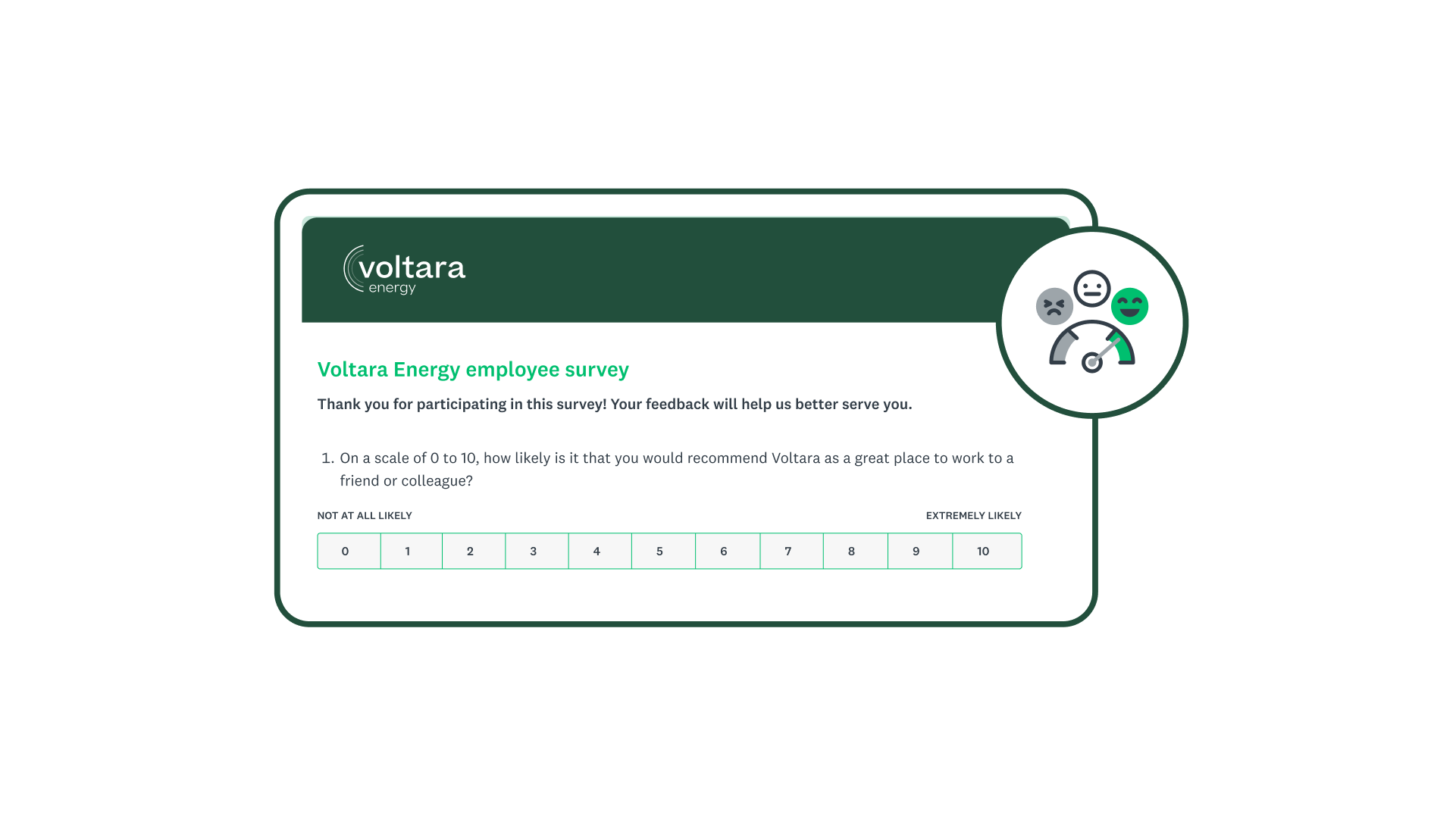
Employee Net Promoter Score is a workplace engagement metric that measures how likely employees are to recommend your organization as a place to work using a 0–10 rating scale.
The eNPS is the foundation for more detailed analysis and actions, setting the stage for deeper insights into employee engagement and loyalty trends—typically through further research, such as employee surveys or interviews.
NPS vs. eNPS
Net Promoter Score and employee Net Promoter Score serve two distinct strategic purposes.
Originally developed by Bain & Company and Fred Reichheld, the NPS framework was designed to quantify customer loyalty and predict business growth. HR leaders adapted the system to create eNPS to evaluate employee experience.
| Feature | NPS | eNPS |
| Audience | Customers | Employees |
| Goal | Measure brand loyalty | Measure workplace satisfaction |
| Question | How likely are you to recommend our product? | How likely are you to recommend this company as a place to work? |
Why is eNPS so important?
The eNPS provides crucial insights into employee sentiment. Employees are the face of your organization, driving customer relationships and overall market presence. Here's why it matters:
eNPS can help improve retention
Addressing employee turnover remains a top concern for HR professionals. eNPS can identify root causes and inform strategies to improve retention. For example, eNPS scores can highlight employee dissatisfaction with compensation or benefits, prompting an organization to strengthen its current offerings.
eNPS can turn employees into brand ambassadors
eNPS reflects how likely your team is to recommend your organization as a great workplace. This sentiment directly indicates your internal brand health and employee advocacy.
Employees naturally discuss their work experiences with friends, family, and on social media. When they are satisfied and engaged, they become organic promoters of your company. Disengaged employees, on the other hand, can spread negativity or apathy, which can detrimentally impact your brand.
Related reading: Using eNPS to close the employee experience gap
eNPS supports strategic HR decision-making
Instead of relying on attrition rates, eNPS offers a clear, quantifiable measure of employee engagement. It serves as a cornerstone for strategic HR planning and improvement initiatives. HR professionals can use this data to address potential issues proactively before they escalate.
Data from a recent SurveyMonkey report underscores the importance of eNPS in navigating HR challenges and leveraging opportunities:
- HR's strategic influence: Organizations that view HR as vital report a stronger role in shaping company culture and decision-making, significantly impacting the overall employee experience.
- Feedback and engagement: In the post-pandemic era, 73% of HR professionals in organizations where HR is vital see an increased role in employee experience management, emphasizing the importance of feedback tools like eNPS.
- Expectations vs. investment: Despite higher expectations from leadership, 19% of HR professionals believe their companies underinvest in employee development. A robust eNPS program can highlight investment areas to meet these growing expectations.
How to calculate eNPS
Calculating your eNPS is a straightforward process that turns employee feedback into a single, clear metric. The eNPS formula is:
% of promoters - % of detractors = employee Net Promoter Score

However, it all starts with one question: On a scale of 0 to 10, how likely are you to recommend this company as a place to work?
Once the results are in, you’ll group your team into three categories based on their scores.
- Promoters: Employees who gave a 9 or 10 score, which means they are highly satisfied and actively contribute to a positive company reputation.
- Passives: Employees who gave a 7 or 8 score, meaning they are neutral or satisfied enough to stay, but they aren’t necessarily enthusiastic advocates.
- Detractors: Employees who gave a score between 0 and 6, meaning they are unsatisfied.
To find your final score, convert the number of employees in each group into a percentage of your total staff. Then, subtract the percentage of detractors from the percentage of promoters. Ignore passives, as they don't affect the score directly.
For example, if 30% of respondents are promoters and 20% are detractors, your eNPS is 10 (30% - 20% = 10).
What is a good eNPS score?
“Good” eNPS is subjective, as scores vary by industry. That said, eNPS scores range from -100 to 100, and most companies rarely score above 30. Our eNPS guidelines help you characterize your score from poor to very good.
- Negative scores: A negative score suggests that detractors outnumber promoters, suggesting widespread dissatisfaction and potential issues with company culture, management, or employee engagement.
- 0-10 (acceptable): This range suggests a balanced split between promoters and detractors. While not alarming, there is a need for improvement.
- 10 to 30 (Good): This range reflects a positive work environment with healthy employee engagement and satisfaction. It is considered good across industries.
- 30 to 50 (Very good): Scores in this bracket are above average and indicate a robust and positive employee sentiment towards the organization. It suggests that effective strategies are in place to promote employee engagement and loyalty, leading to most employees being promoters.
- 50+ (Excellent): An excellent eNPS score showcasing an exceptional employee experience significantly exceeding industry averages. Organizations with scores have cultures that actively promote and support employee advocacy.



Programs connect multiple surveys to show you trends. Available on Advantage plans and higher.
Employee Net Promoter Score benchmarks
It's important to note that eNPS benchmarks can vary significantly across different industries. A good score in one sector might be average in another.
For example, industries with traditionally lower employee satisfaction rates may view a score of 20 as positive. In contrast, more competitive sectors might aim for scores of 50 or higher to reflect their stronger focus on employee experience and engagement.
eNPS is a quantifiable snapshot of your employee satisfaction, but it’s important to combine your score with other types of employee feedback to get a complete picture of employee loyalty and engagement.
How to improve employee Net Promoter Score (5 tested strategies)
Calculating and knowing your eNPS is only helpful if you act. Without action, your employee Net Promoter Score is just another data point in a spreadsheet. Use these 5 time-tested tactics to turn your data point into a growth strategy.
1. Use follow-up surveys
Supplement the standard eNPS question with other eNPS questions and follow-up employee feedback surveys that probe the reasons behind the scores. Use anonymous surveys to encourage honest, unfiltered feedback.
Related reading: Creating anonymous employee surveys
2. Target key areas for impactful change
Analyze eNPS feedback to identify high-impact areas for improvement, such as hiring and onboarding to building and maintaining an inclusive workplace.
Prioritize actions based on feedback trends and potential impact on employee satisfaction and engagement, starting with areas directly affecting day-to-day employee experiences.
3. Stay informed of HR trends
Regularly research and implement current HR trends and opportunities, such as flexible work arrangements, employee wellness programs, and modern learning and development tools.
4. Establish consistent eNPS measurement intervals
Conduct eNPS surveys regularly (e.g., quarterly or biannually) to monitor trends and measure the impact of changes. Schedule surveys in advance and integrate them into the company calendar to ensure consistent participation and timely analysis.
5. Centralize employee experience management
Track and manage employee experience, from feedback collection to analysis, to simplify eNPS procedures.
Choose a platform that streamlines employee engagement with intuitive tools and resources, including pre-written eNPS survey templates and expert-written questions, to create and distribute surveys effortlessly.
Discover valuable employee insights with SurveyMonkey
Incorporating eNPS into your HR strategy helps retain top employees while attracting new talent, making it a pivotal tool in today's competitive labor market. Regularly tracking eNPS helps maintain a pulse on employee engagement, ensuring that initiatives align with employee needs and expectations.
Take the first step to transforming employee engagement
Create an eNPS® survey in minutes to discover your organization's score.
NPS, Net Promoter & Net Promoter Score are registered trademarks of Satmetrix Systems, Inc., Bain & Company and Fred Reichheld.
Discover more resources

Attract, engage, and retain top talent with data-driven insights
Create powerful HR surveys with SurveyMonkey to gather feedback, boost engagement, and improve workplace culture. Streamline HR processes with customizable templates.

Introducing new HRIS integrations: Connect employee feedback to your people data
Spot turnover risk early. New HRIS integrations sync your HR data with employee feedback, so you can skip the list prep and see responses in context.

HRIS integrations for SurveyMonkey
Connect SurveyMonkey to Workday or BambooHR to reach the right employees with trusted, current data and analyze feedback in context.

How to write a hybrid work policy your team will actually follow
Build a hybrid work policy that spells out in-office days, attendance rules, and exceptions, then keep it current with employee survey feedback.