Demographic survey questions: Inclusive examples, tips, templates, and best practices
Gain clear, inclusive insights with 13 ready-to-use demographic survey questions and examples for age, gender, education, income, and more.
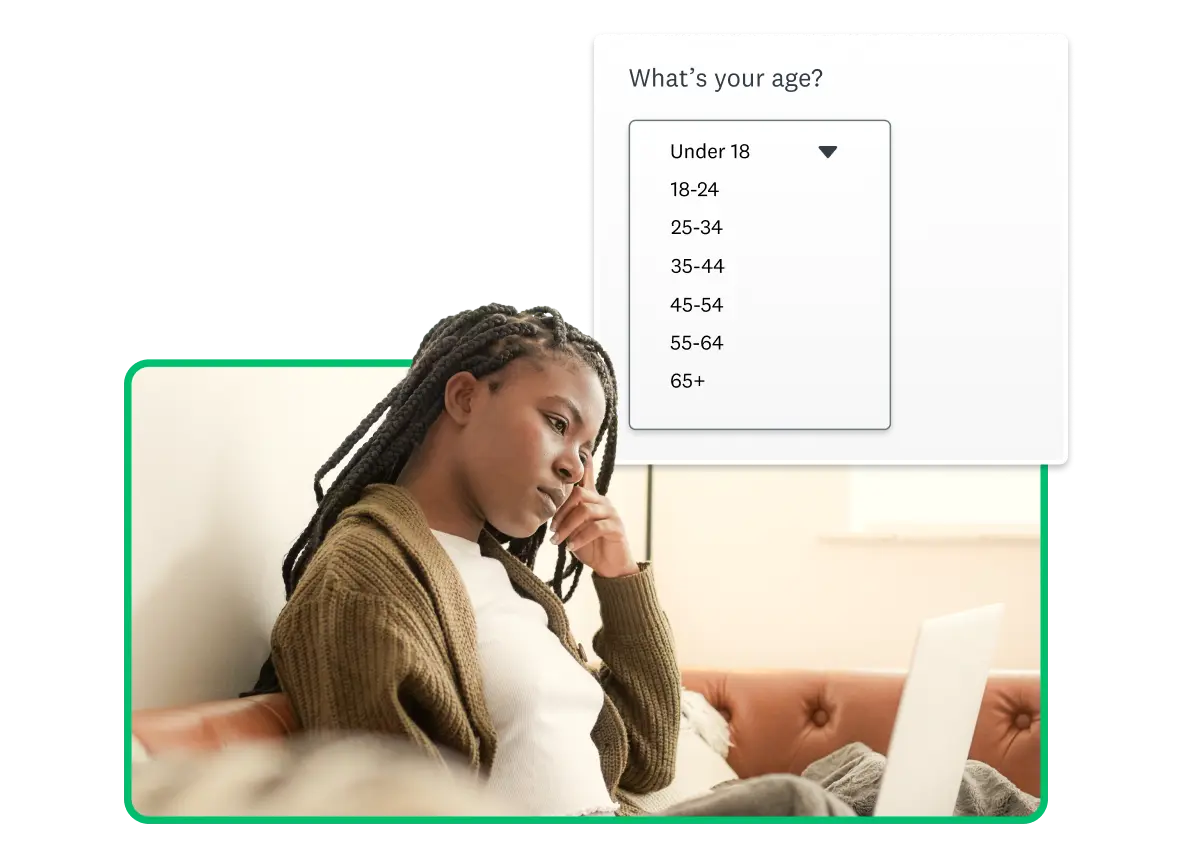
Demographic survey questions capture key traits like age, gender, ethnicity, income, education, and location to show who your respondents are and how different groups experience your product or service. Demographic data helps you segment audiences, test representativeness, and make data-driven decisions.
The way you ask matters. Missing a “Prefer not to disclose” option can lower response rates, overlapping ranges can skew crosstabs, and outdated race or ethnicity options can make results hard to compare with public datasets.
This guide shares inclusive, copy-ready demographic question examples with answer options, explanations, and templates. You’ll see how current U.S. Census standards shape demographic categories today, and how to align your surveys with them.
What does demographic data include?
Demographic questions include age, gender, education level, employment status, annual household income, marital and family status, housing, business, and farm ownership. Together, these data points form a demographic profile that shows how different groups experience your products, services, or messages.
Collecting this basic demographic information helps you analyze patterns, uncover representation gaps, and make more informed decisions. For instance, a company comparing education level with product adoption might discover that users with less formal education require simpler onboarding content.
Strong demographic data improves both equity and precision. It allows you to segment audiences, design inclusive experiences, and measure impact across groups, all while keeping responses ethical and anonymous.
13 inclusive demographic survey question examples
SurveyMonkey offers a range of expert-designed demographic survey templates you can use or adapt to build your own questionnaire.
If you only need a few items, you can pull certified demographic questions directly from the Question Bank, a quick way to include standardized, research-backed wording in any larger survey.
Here are 13 demographic survey question examples you can copy, customize, and combine to better understand your audience and ensure your data is inclusive, comparable, and ready for analysis.
1. Age
One of the most common demographic survey questions asks about age range. Age data helps with market segmentation, audience profiling, and forecasting customer needs across life stages.
Question: What is your age?
Answer options:
- 15 or younger
- 16–19
- 20–24
- 25–29
- 30–34
- 35–39
- 40–44
- 45–49
- 50–54
- 55–59
- 60–64
- 65 or older
- Prefer not to disclose
Why this works: Non-overlapping ranges make analysis easier and preserve respondent privacy. You can also organize groups by generation (for example, Gen Z, Millennials, Gen X, Baby Boomers), depending on your research goals.
Tips for asking about age:
- Explain why you’re asking. Let respondents know how the data will be used.
- Protect privacy. Include a “Prefer not to disclose” option.
- Place it last. Sensitive questions like age often work best at the end of a survey.
2. Ethnicity
Asking about ethnicity in surveys can reveal valuable insights into your audience’s cultural backgrounds, preferences, and needs. This information can help identify strategy gaps and shape more inclusive programs, products, and messages.
Question: How would you describe your ethnicity?
Answer options:
- White
- Black or African American
- American Indian or Alaska Native
- Asian
- Native Hawaiian or other Pacific Islander
- From multiple races
- Some other race (please specify)
- Prefer not to disclose
Why this works: Clear, widely recognized categories improve comparability with public datasets while giving every respondent a relevant option. Always include an “Other (please specify)” field so participants can self-identify in their own words.
Learn more in our guide on how to ask ethnicity questions in a survey.
3. Gender
Asking about gender identity helps you understand the different perspectives and experiences that shape your audience. Preferences, product use, and satisfaction can vary across genders, so including this question ensures your insights reflect that diversity.
Question: What is your gender?
Answer options:
- Woman
- Man
- Nonbinary
- Other (please specify)
- Prefer not to disclose
Why this works: Including both a self-describe and opt-out option allows everyone to answer comfortably and accurately. If your study requires both sex assigned at birth and gender identity, ask them separate, clearly justified questions to avoid confusion.
4. Marital or relationship status
Asking about marital or relationship status helps you understand people’s needs and preferences based on their life stage and social situation. These insights can inform how you design products, services, or communications for different audiences.
For example, a travel company might create different packages for singles, couples, and families. Similarly, financial providers can tailor offerings to the unique planning needs of singles, married couples, or people experiencing separation or divorce.
Question: What is your current relationship status
Answer options:
- Single
- Married
- Separated
- Divorced
- Widowed
- Prefer not to disclose
Why this works: Using inclusive, modern language covers a range of relationships and life situations while keeping the list clear and respectful.
5. Education level
Asking about education level helps you understand your audience’s knowledge base, skills, and potential earning power. It’s a useful demographic indicator for segmentation, market research, and workforce analysis.
Question: What is the highest level of education you have completed?
Answer options:
- Less than high school
- High school diploma or equivalent (GED)
- Some college, no degree
- Associate degree
- Bachelor’s degree
- Graduate or professional degree
- Prefer not to disclose
Why this works: Simple, standardized phrasing makes responses easy to compare across studies. If you’re running international surveys, localize terms, for example, GCSE or A-level in the UK, to maintain accuracy.
6. Employment status
Employment status offers insight into your audience’s economic situation, which can shape purchasing behavior, priorities, and product preferences. Because this can be a sensitive question, always make it optional or include a “Prefer not to disclose” option.
Question: Which of the following best describes your current employment status?
Answer options:
- Employed full-time
- Employed part-time
- Self-employed
- Not employed, looking for work
- Not employed, not looking for work
- Retired
- Disabled, not able to work
- Prefer not to disclose
Why this works: Clear, mutually exclusive categories keep data analysis clean and reflect the wide range of employment circumstances. Including an opt-out option supports comfort and completion.
7. Household income
Household income combines the earnings of everyone living in the same home. This data helps you understand your audience’s purchasing power and segment customers by economic profile. Because it’s sensitive, always provide clear ranges and include a “Prefer not to disclose” option.
Question: What was your combined household income in the last year?
Answer options:
- $0–$9,999
- $10,000–$19,999
- $20,000–$29,999
- $30,000–$39,999
- $40,000–$49,999
- $50,000–$59,999
- $60,000–$69,999
- $70,000–$79,999
- $80,000–$89,999
- $90,000–$99,999
- $100,000 or more
- Prefer not to disclose
Why this works: Using bracketed ranges simplifies analysis while protecting privacy. Always note whether amounts are before or after taxes and localize ranges by currency and market norms.
Learn more about how to ask income survey questions.
8. Living situation
A respondent’s living situation—whether they own, rent, or have another arrangement—can signal overall stability and influence financial behavior or service needs. Including this question helps you better understand your audience’s household context.
Question: Which of the following best describes your current living situation?
Answer options:
- Own my home
- Rent my home
- Other (please specify)
- Prefer not to disclose
Why this works: A short, direct question captures key housing data without overcomplicating choices. The open-text “Other” option allows respondents to self-describe alternative living arrangements.
9. Language
Asking about a respondent’s primary language helps you understand communication preferences and cultural context. Language data supports accessibility, translation planning, and localization, ensuring your messages reach people clearly and respectfully.
Question: What language do you mainly speak at home?
Answer options:
- English
- Spanish
- Chinese
- French
- Some other language (please specify)
- Prefer not to disclose
Why this works: Including the most common options while allowing a self-describe field ensures broad representation. These insights can help you adapt campaigns, content, and experiences for multilingual audiences.
10. Family and dependents
Questions about family and dependents show how many children under 18 live in a respondent’s household. This information can reveal priorities, time pressures, and spending patterns that influence how people engage with your brand.
For example, if many of your customers have young children, you can tailor products, messaging, or support to address the realities of parenting and family life.
Question: How many children are you the parent or guardian of who live in your household (aged 17 or younger)?
Answer options:
- None
- 1
- 2
- 3
- 4
- More than 4
- Prefer not to disclose
Why this works: A simple, numeric format keeps the data clean and comparable. Adding a “Prefer not to disclose” option maintains comfort for more private respondents.
11. Media consumption preferences
Understanding your audience’s media consumption preferences shows where they get their information and what formats they trust most. These insights can help you target messages, advertising, and content more effectively across channels.
Question: Where do you currently get your news about politics?
Answer options:
- Television
- Radio
- Newspaper — hard copy
- Newspaper — online
- Magazines — hard copy
- Magazines — online
- Internet blog
- Internet news site
- Other (please specify)
Why this works: Listing distinct platforms captures both traditional and digital behaviors. Including an open “Other” field allows respondents to specify emerging or niche sources relevant to your audience.
12. Religion or belief system
Asking about religion or belief systems helps you understand the spiritual diversity within your audience. These insights can guide how you design products, experiences, or content that align respectfully with different traditions and practices.
Always approach this topic with care and transparency, and allow respondents to skip or opt out if they prefer not to share.
Question: Do you identify with any of the following religions? (Select all that apply.)
Answer options:
- Protestantism
- Catholicism
- Christianity (other)
- Judaism
- Islam
- Buddhism
- Hinduism
- Interdenominational or non-denominational
- No religion
- Other (please specify)
- Prefer not to disclose
Why this works: Offering multiple selections and clear opt-out choices respects personal boundaries and captures a fuller picture of belief diversity. The “Other” field allows respondents to describe their affiliation in their own words.
13. Political affiliations
Understanding a respondent’s political affiliation or viewpoint can reveal values, priorities, and motivations that shape decision-making. These insights can help you tailor messaging or offerings to better connect with your audience, while also avoiding language that could alienate them.
Because this is a sensitive topic, be transparent about why you’re asking and always allow respondents to opt out.
Question: How would you describe your political viewpoint?
Answer options:
- Very liberal
- Slightly liberal
- Moderate
- Slightly conservative
- Very conservative
- Prefer not to disclose
Why this works: Clear, neutral wording helps respondents choose an answer without feeling judged or boxed into a label. Providing a “Prefer not to disclose” option maintains trust and completion rates.
9 best practices for collecting demographic data
Think about a time you filled out a form at a bank or registered for an activity. You probably shielded the paper from others or turned it upside down before handing it in.
Why? Demographic data is personal. It identifies who we are, and most people want to protect that information.
With that in mind, it’s essential to use thoughtful best practices when designing surveys that collect demographic information. These tips will help you build trust, increase completion rates, and capture accurate, high-quality data.
1. Start by establishing your objectives
Before you launch any survey, set clear goals. Defining what you need to learn from demographic data helps you decide which questions are truly necessary. Goal-specific questions deliver relevant, actionable insights and reduce unnecessary respondent burden.
2. Clarify the purpose of the survey
Tell respondents why you’re asking for demographic information and how you’ll use it. A brief, transparent survey introduction builds trust. For example:
“We want to understand more about our customers and their needs. This information helps us design the right mix of products and services to ensure your satisfaction.”
3. Keep the survey short and to the point
It’s tempting to include every possible demographic question—but too many can cause survey fatigue. Respondents may rush through answers or drop out altogether. Keep your survey focused, concise, and relevant.
4. Be respectful
Demographic questions involve personal identity—topics like gender, income, living situation, or religion. Use inclusive, neutral language and give respondents the choice to skip sensitive items with a “Prefer not to disclose” option. Respecting autonomy fosters comfort and honesty.
5. Use easy-to-understand language
Keep your wording simple and direct. Avoid jargon, technical phrasing, or combined (double-barreled) questions. Clear, plain language helps respondents understand exactly what you’re asking and improves data reliability.
6. Understand how and when to ask sensitive questions
Approach sensitive items gradually. Just like a real conversation, build rapport first and ask personal questions later in the survey. This approach improves both comfort and accuracy.
Related reading: How to ask sensitive questions in surveys
7. Watch out for overlapping numbers
Ranges in demographic questions, such as age or income, should never overlap. If one range ends at 59, the next should start at 60. Clear, consistent brackets prevent confusion and keep your analysis precise.
8. Consider making responses anonymous
Many respondents hesitate to share details like income, employment, race, or ethnicity. If your research focuses on trends rather than individual profiles, make responses anonymous and communicate that clearly. Transparency increases participation and accuracy.
9. Make your survey accessible and mobile-friendly
Your survey should be easy to complete for everyone, regardless of ability or device. Use SurveyMonkey templates that meet U.S. Section 508 and European Accessibility Act standards. Ensure your survey works seamlessly on phones, tablets, and computers.
Related reading: Accessibility when using SurveyMonkey
How to ask demographic questions in a survey
Demographic data is most valuable when it’s collected with care, clarity, and respect. The way you ask demographic questions, from where they appear in the survey to how they’re worded, can make a big difference in response quality and completion rates.
Placement: Add demographic items near the end
Place demographic questions toward the end of your survey unless they’re needed for logic or routing. Respondents are more comfortable answering personal questions after engaging with the main topic, reducing early drop-off and improving data accuracy.
Phrasing: Keep wording neutral and inclusive
Ask questions in straightforward, neutral language. Avoid assumptions about identity, family structure, or employment status. Simple, inclusive phrasing helps every respondent see themselves reflected in your options.
Privacy: Be transparent and give choice
Tell respondents why you’re asking for demographic data and how it will be used. A short statement like, “We collect this information to understand and serve all customers equitably,” builds trust. Always include a “Prefer not to disclose” option to give people control over their information.
Accessibility: Design for everyone
Make sure your survey is easy to complete for all respondents. Use WCAG-compliant themes, clear color contrast, and screen-reader-friendly question types. Add alt text for images and icons to support accessibility.
When not to ask
Ask only what you’ll use. If a question doesn’t serve your survey’s purpose or you can’t clearly explain why it’s included, leave it out. Keeping your survey concise and relevant shows respect for respondents’ time and privacy and strengthens trust in your research.
Demographic survey templates
Now that you’ve seen what inclusive demographic survey questions look like, you can explore ready-to-use demographic survey templates written and tested by SurveyMonkey expert survey methodologists. Each template includes copy-ready demographic questions built for clarity, comparability, and inclusion, so you can start collecting meaningful data right away.
Please note: Some demographic templates are available in English only.
U.S. demographics templates
The U.S. Demographics Snapshot Template offers six foundational demographic questions about gender, age, education, employment, household income, and race, perfect for quick audience overviews.
For deeper analysis, the U.S. Demographics Survey Template expands to 11 questions, adding location, housing, marital status, business or farm ownership, and personal income to provide a more complete demographic profile.
Employment and education templates
The Employment Survey Template includes two concise questions about employment status and type of work, ideal for adding labor data without increasing survey length.
The Education Demographics Template contains 16 questions covering gender, income, race, and relationship to students. It’s designed for schools, universities, and education researchers who need a clear picture of their community makeup.
Business and market research templates
The Firmographics Survey Template helps you learn more about the organizations in your audience. Ten questions explore company-level traits like founding year, headquarters, employee count, and locations, useful for segmenting B2B audiences.
To understand customer segments, the Target Market Demographics Template and Typical Customer Demographics Template gather details about age, gender, education, employment, income, marital and family status, and housing. Together, they create a well-rounded target market demographic questionnaire for profiling and persona development.
Frequently asked questions
- What is demographic information?
- Where should demographic questions go in a survey?
- How do I localize demographic categories?
- Can I ask about gender identity and sexual orientation?
- How do I keep my survey accessible to all respondents?
- When should I avoid asking demographic questions?
Get started free with SurveyMonkey demographic templates
Build your demographic survey section in minutes with copy-ready standard demographic questions and inclusive templates aligned to the latest standards. Ensure every respondent can participate by designing with accessibility and clarity in mind.
Get started free with our Demographic Survey Template to launch your first survey today, or explore the Question Bank to insert expert-written items directly into your form. For advanced needs like benchmarking, integrations, and enterprise-grade compliance, talk to us.
Power your business with SurveyMonkey
Discover more resources

Solutions for your role
SurveyMonkey can help you do your job better. Discover how to make a bigger impact with winning strategies, products, experiences, and more.

Product deep dive: Collect
Learn how to use each survey collector to achieve your outcomes.

How to create a poll in a text message
From "sent" to "solved"—learn how to create a poll in a text message with SurveyMonkey that wins.

New at SurveyMonkey: AI summaries, smarter charts, and longitudinal analysis
The latest SurveyMonkey updates and features, including AI summaries, modernized charts, and longitudinal analysis.