Student surveys: Questions, tips, and how to boost response rates
Gather valuable insights from your student population with effective student surveys.
Summary:
- Questions should be age-appropriate and easy to understand to ensure students interpret them correctly.
- Topics often include classroom environment, teacher support, bullying, and extracurricular interests.
- The goal is to empower students by giving them a voice in their education and school culture.
Student surveys are valuable sources of feedback for teachers and a means of self-reflection for students. Surveys at the beginning, middle, or end of the school year can help you plan effective classes, reach struggling students, and improve your teaching methods.
Wondering what to ask students and how to improve participation? This guide will provide key questions to ask and offer tips for improving your response rates. Read on for practical guidance on using student surveys to gather insightful feedback.
What is a student survey?
A student survey is a tool used by educators and institutions to collect feedback on their educational experience, enhancing lessons and driving more effective teaching. Student surveys can be used to improve student outcomes by collecting data on students’ needs and opinions. They can also measure satisfaction levels, encourage candid feedback, and inform your teaching methods.
Student surveys are commonly used to:
- Measure engagement or satisfaction
- Fine-tune teaching methods
- Track student progress
- Evaluate teacher performance
- Gather feedback on lessons
Importance of student surveys
Student surveys are valuable educational tools that offer insights into the student experience. The insight informs teaching methods and drives improvements in the learning environment. By understanding student perspectives, educators can create more effective and engaging courses and educational experiences.
1. Improve student outcomes
Student feedback directly influences educational strategies. Surveys reveal which teaching methods resonate with students and which areas need more attention.
For example, if many students find a lesson challenging, educators can revisit and modify their approach to ensure better comprehension. Regular feedback helps fine-tune teaching practices to meet the diverse needs of students, thereby improving their academic performance.
2. Ensure student satisfaction
A satisfied student is more likely to be engaged and motivated. Surveys can identify what students enjoy about their classes and what aspects they find frustrating. By addressing these concerns, educators can create a more positive learning environment.
For instance, if students express that interactive activities enhance their learning, teachers can incorporate more hands-on projects into their curriculum.
3. Track student progress
Surveys are an excellent tool for tracking student progress over time. By regularly collecting and analyzing feedback, educators can monitor changes in student performance and satisfaction. This ongoing assessment helps identify trends and make data-driven decisions to support student growth.
For example, if surveys indicate a steady improvement in student engagement after implementing new teaching strategies, educators can continue to refine and expand these methods.
4. Encourage student voices
Giving students a voice in their education empowers them and promotes a sense of ownership. Surveys provide a platform for students to express their opinions and contribute to the learning process. This inclusion fosters a more democratic classroom environment where students feel valued and heard.
15 key questions to ask your students in a survey
We know that creating student surveys can be intimidating. That’s why we’re sharing a plethora of survey questions for students to help you craft effective surveys. These survey questions for students are categorized into three topic areas: learning experience, school environment, and teacher effectiveness.
Learning experience
1. Rank this year's lessons from easiest to hardest.
Find out what type of subject material your class struggles with by asking students to rank the most important lessons from easiest to hardest. You can ask this question using a drag-and-drop ranking question type. Using lessons as your answer choices, you can quickly remind students what you covered in class.
These interactive questions are also fun and can prevent straight-lining (when a bored respondent completes a survey quickly by choosing the same answer for every question). Just be careful not to add too many answer options!
2. How much time do you spend on homework every night?
Homework reinforces learning, but some studies find that too much homework can negatively affect well-being. Find out your students’ homework habits with multiple-choice or slider questions. If any outliers appear—whether they spend very little time or way too much—follow up to discover why.
3. Which classroom activities do you learn from the most?
You probably already know which classroom activities your students really enjoy, but do you know which are the most valuable to their education?
Ask your students using a multiple-choice question. You can follow up with a single textbox question, asking why they found that activity to be so useful.
4. What are you proud of accomplishing in class this year?
What project, assignment, or test gave each of your students pride in their learning? In class, we don't usually pause to celebrate individual students' successes. It's important, then, for students to identify and articulate their accomplishments. This is especially true given that pride in learning is closely linked to higher academic success.
5. What do you want to learn next?
If you ask this question at the beginning of the year, it helps you tailor your lesson plans to your students' interests. Asking it at the end of the year encourages your students to think about their independent academic interests. You can also share your students' answers with next year's teacher to maintain continuity of learning between the two classes.
School environment
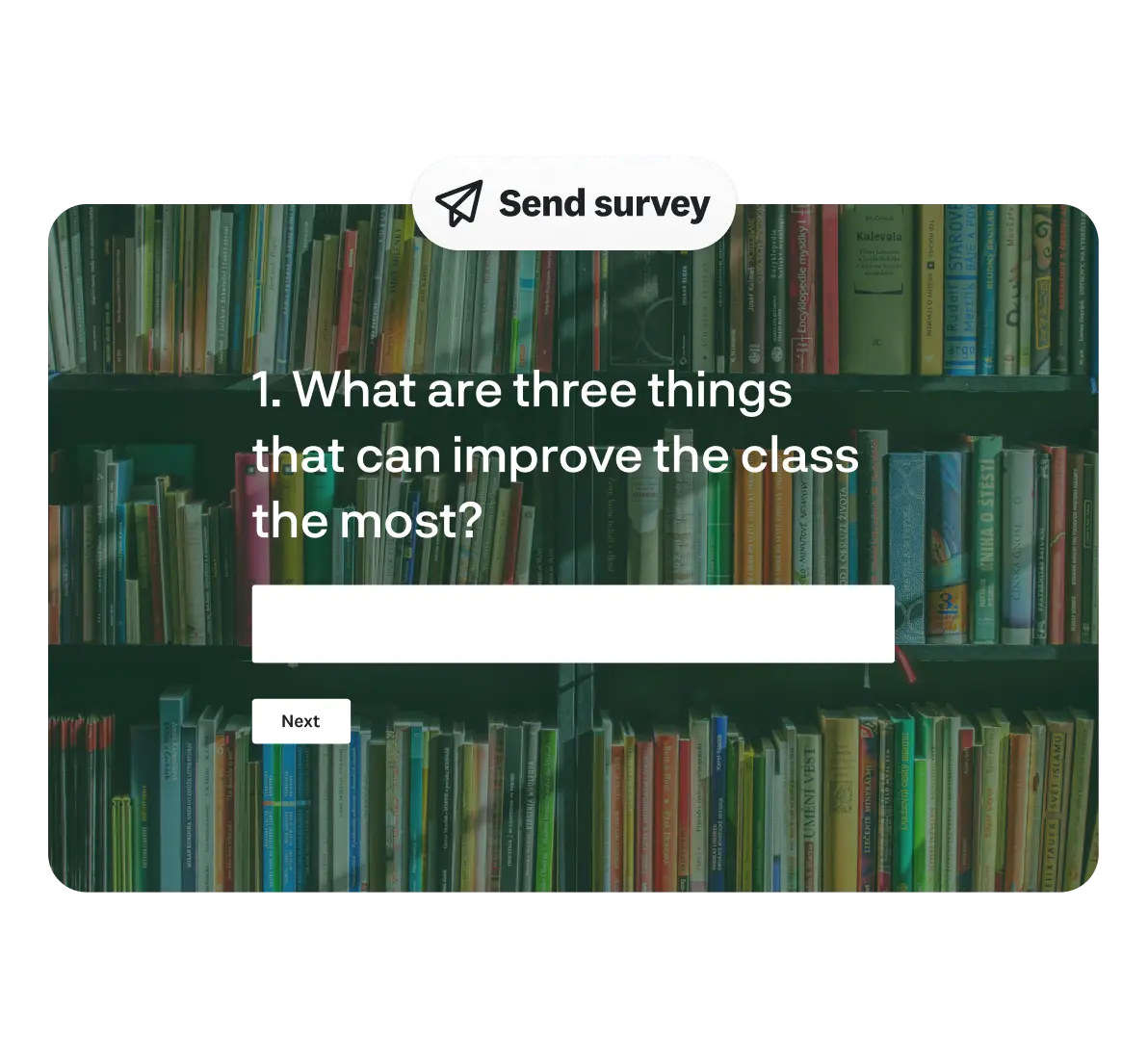
1. What are three things that can improve the class the most?
If you've written student survey questions before, you know that often, the most helpful responses are also the most specific ones. So, ask students to list specific things they like and dislike about your class using a comment box. Students can choose to address classroom dynamics, classroom management, the curriculum, or any other topic they wish in this open-ended question.
2. What is one thing you'd change about the class if you could?
This question prompts students to think constructively about class, rather than just critically. While you'll have to curate your students' suggestions based on what is and isn't realistic, adopting one or more of their suggestions shows your students that you're listening to them.
3. Do you feel comfortable participating in class discussions? Why or why not?
This question invites students to share if they feel comfortable speaking up or answering questions during class. The answers to this question will help you understand if there are any barriers, such as fear of judgment or unclear expectations, that keep students from feeling comfortable in class discussions.
4. How well do students in this class work together?
Teamwork plays a significant role in learning in a classroom setting. Assess students' perceptions of their classmates by asking if they believe students work well together. You can use a multiple-choice scale (not very well / somewhat well / very well). Then, you can ask the follow-up question: What could help improve collaboration?
5. Is our classroom a respectful and welcoming place?
Teachers should regularly assess how students feel about their class environment to make continuous improvements. Asking this question enables teachers to gather feedback on how comfortable students feel at school. A safe and welcoming school environment is essential to student success.
Teacher effectiveness
1. Rate your teacher. How could she/he do better?
Many teachers are afraid to ask students for personal feedback. While opening yourself up to negative feedback can be scary, seeking constructive criticism and taking it in stride will enable you to reach your full potential in your job.
Before you ask students to offer ways you can improve as a teacher, ask them to rate you with a number or slider scale.
2. What advice would you give to students in next year's class?
The advice that your students give to peers reveals a lot about their biggest takeaway from your class. When they offer advice, what do they focus on: The lesson plans, the tests, the teaching style? This question reveals not just what current students think of your class, but the expectations future students will have on their first day.
3. What teaching strategies helped you learn best this year?
Different students learn in various ways. It’s important to understand what strategies were most effective for your students. Students may point to specific tools, such as group work, visuals, or hands-on projects, that you can emphasize moving forward.
4. Was there anything that made learning more difficult for you in this class?
Teachers should strive to eliminate distractions and other obstacles that hinder student learning. Asking this question gives teachers the data they need to enhance their learning environment. Students can share what made learning more challenging in their class. Teachers can then analyze the data and take action to improve their teaching.
5. How well does your teacher explain new concepts?
School is all about learning new concepts and deepening students' knowledge. Asking students how well they think you explain new concepts gives you insight into your strengths and weaknesses. You can have students rank your teaching effectiveness on a scale and ask the follow-up question: What could make explanations clearer or easier to understand?
7 student survey tips to increase response rates
Getting a student to do their homework can be challenging, but soliciting responses for a survey often presents an equally difficult hurdle. Engaging participants requires overcoming respondent fatigue and ensuring the survey instrument is compelling enough to warrant their time and attention. Follow these student survey tips to beat brain drain and raise response rates.
1. Time the survey correctly
The timing of student surveys is crucial to increasing response rates and promoting participation. Student surveys should be sent at relevant times, such as the end of each quarter or semester, after a course concludes, or right after a major project or unit.
Students are more likely to share thoughtful feedback when the learning experience is fresh in their minds. Avoid sending surveys during busy testing weeks or schoolwide events when students feel rushed or overwhelmed.
2. Send reminders
Sending reminders helps promote higher response rates for student surveys. If students aren’t completing your surveys, try sending timely reminders. Consider sending a reminder a couple of days after the initial invite to participate, then again a week later. You can also send a “last call” reminder on the survey deadline to potentially get a few more responses.
3. Keep questions simple
Avoid overcomplicating your survey with jargon or lengthy questions. Simple, straightforward questions are easier for students to understand and answer.
For example, instead of asking, "How do you perceive the overall educational efficacy of our institution?" ask, "How satisfied are you with your classes?" Clear questions reduce confusion and improve the quality of responses.
4. Use a variety of question types
Mixing question types can make surveys more engaging. Use multiple-choice questions for quick responses, Likert scales to measure opinions, and open-ended questions for detailed feedback.
For example, combine "How satisfied are you with the school's facilities?" (Likert scale) with "What changes would you like to see in the facilities?" (open-ended). This variety keeps students interested and reduces survey fatigue.
5. Keep surveys short
Short surveys are more likely to be completed. According to SurveyMonkey data, the median number of questions in a survey is 12. Surveys with 10 questions have a high completion rate of 89%, while those with 40 questions drop to 79%.
Focus on asking essential questions to avoid survey fatigue and improve data quality. A shorter survey ensures higher response rates and better data. If needed, follow up with more detailed student feedback or interviews for specific groups.
6. Offer incentives
Offering incentives can boost participation. These could be small rewards, such as extra credit, school swag, or entry into a prize draw. For example, "Complete this survey to win a gift card!" Incentives motivate students to take the time to provide thoughtful feedback.
7. Ensure anonymity
Students are more likely to be honest if they know their responses are anonymous. Clearly communicate that their feedback is confidential, such as, "Your responses are anonymous and will be used to improve the school environment." This assurance can increase the honesty and quality of the responses.
What is a good response rate for a student survey?
For student surveys, a response rate of 10-30% is considered good. A response rate above 30% is considered excellent. Students are often very busy with schoolwork, extracurricular activities, and their personal lives. You shouldn’t expect every student to complete your surveys; however, there are a few factors that impact response rates.
Factors that affect student survey response rates
These factors all impact the number of student survey responses you might see.
- Incentives: Offering students an incentive can encourage more students to fill out your surveys. Incentives can include items such as entry into a raffle, an e-gift card, or a pass for a homework assignment.
- Timing: The time at which you send your survey will dictate how many students complete it. Try sending surveys at relevant times and avoid sending them during overly busy weeks.
- Length of survey: Survey length can be an important factor in the number of responses you get. Long surveys with numerous open-ended questions tend to take longer to complete, and as a result, typically receive fewer responses. Keep surveys brief and easy to complete for the highest response rates.
- Anonymity: Anonymous surveys tend to perform better with students. Consider keeping responses anonymous to make students feel more comfortable expressing their true opinions.
How to design an effective student survey
Designing an effective student survey isn’t difficult when you know the steps. Here are some tips for creating student surveys that help you collect high-quality student feedback.
Determine your goal
Before sending a survey, it’s crucial to determine the goal and primary focus area. You may want to measure student satisfaction or assess the effectiveness of your teaching methods. Whatever you’re looking to gather data on, make sure it's clear before selecting questions for your student survey.
Structure your survey
Structure your survey by asking questions in a logical order and using precise language. Surveys should be easy to follow and understandable to students. Try starting with easier questions, such as multiple-choice, and ending with open-ended questions.
Choose the right question types
Using a mix of survey question types (e.g., Likert scale, multiple-choice, and open-ended) allows you to gather richer data. Varying your question types also helps to keep students engaged throughout the entire survey. Keep your survey concise and focused by including only relevant questions that support your goal.
Avoid leading or biased questions
Student survey questions should be neutral and objective for the most accurate data. Avoid using any language that suggests a “right” or “best” answer. For example, instead of asking “How much do you enjoy our fun group activities?” ask “Do you find group activities helpful to your learning?” Clear and unbiased questions help ensure student responses are honest and reflect their true experiences.
Analyzing and using student survey results
Once you’ve sent out student surveys and collected responses, what’s next? The next step is to analyze the student survey data to identify trends or patterns in responses. Analyzing data enables you to gain valuable insights that improve your teaching effectiveness and drive better student outcomes.
Summarize quantitative data
Quantitative data is data that can be represented numerically. Think rating scales, ranking questions, or multiple-choice responses. When interpreting quantitative data, look for patterns across students’ answers.
For example, most students may have rated a specific lesson highly, signaling it was engaging and effective. Use averages, percentages, and simple graphs or charts to organize and display data.
Interpret qualitative feedback
Qualitative data comes from open-ended questions that allow students to share feedback freely. It’s descriptive data that cannot easily be measured numerically. Review survey responses and parse through feedback to identify common words, phrases, or themes. Group similar comments together to uncover common experiences among students.
For instance, you may notice that many students mentioned they really enjoyed group projects in your class. This insight suggests that collaborative learning is meaningful to students and can be used to inform your upcoming class planning.
Apply insights to improve learning outcomes
After you’ve sorted and analyzed the data from your education surveys, it’s time to take action. Apply insights you gleaned when analyzing the data to improve your students’ learning outcomes. Surveys for students help you better understand how students like to learn and what improvements you can make to support engagement.
You can start by identifying one to three changes to implement and sharing them with your students. Sharing insights helps students know their feedback is valuable and taken into consideration.
Build a student survey in minutes with SurveyMonkey
Student surveys enable teachers to make targeted improvements that support higher engagement and better learning outcomes. Use survey questions for students to design your own student surveys.
Short on time? Use one of our education survey templates to kickstart the survey creation process. With SurveyMonkey’s many templates, you can craft highly effective student surveys in no time.
Start collecting student feedback today!
Ready to get started?
Discover more resources

Solutions for your role
SurveyMonkey can help you do your job better. Discover how to make a bigger impact with winning strategies, products, experiences, and more.

Why are surveys important in research?
Surveys are important in research because they offer a flexible and dependable method of gathering crucial data. Learn more today.

Student surveys: how to use class feedback to improve teaching techniques
Student surveys give teachers and administrators important information about which parts of a course or program are working and which aren’t. Student feedback also gives more context to other forms of teaching evaluation, like having guest teachers sit in on classes—which the MET project found to be a flawed way to determine teaching quality.

10 Student Survey Templates & Example Questions
Need student feedback? Learn to write student surveys with these tips and best practices, plus see sample student surveys for great results.