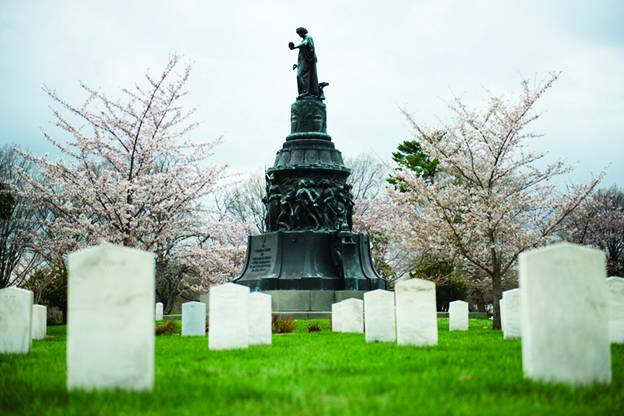
Enter your opinion on the Civil War Monument

THIS SURVEY IS FOR VMI CADETS, VMI ALUMNI AND RESIDENTS OF NEW MARKET, VIRGINIA ONLY

This survey is for VMI Cadets, VMI Alumni, and the residents of New Market, Virginia  ONLY
You must provide sufficient information in name, email, etc. for verification you are either a current VMI Cadet, a VMI Alunus/ae or a resident of New Market Virginia. Without verification, your responses may be discarded. We will add your contact information to our email list for future updates, but it will NOT be shared with any third parties. Your name and comments will not be shared without your permission.
1.Your First Name(Required.)
2.Your last name(Required.)
3.Email(Required.)
4.VMI CLASS or indicate you are a resident of New Market, Virginia(Required.)
5.Phone Number
6.address
7.If there is an opportunity to relocate Sir Moses Ezekiel's statue from Arlington national Cemetary, what should be its new location?
8.What should be done with Sir Moses' remains currently buried at the base of his statute in Arlington?

NOTE: Jewish law forbids the transfer of a dead body or of remnant bones from one grave to another, even when it is to a more respected site (Sh. Ar., YD 363:1; based upon Sem. 13:5–7; TJ, MK 2:4, 81b). This traditional prohibition is, however, lifted in the following cases: (a) If the dead person is to be reinterred alongside his parents or close relatives; the sanction is based on the concept that "It is seemly for a man to repose with his family, and in doing so, honor is conferred upon the deceased" (Sh. Ar., ibid.; Sem. 13:7). In Orthodox practice this is applicable where reinterment is in a family plot already in use, but not if a new site is acquired for future family use. Reform Judaism, however, permits disinterment for reburial in a family plot that is to be inaugurated and consecrated. Litigation on this subject took place in New York City in 1902 (Cohn vs. Congregation She'arith Israel) and the court sustained the congregation which refused to permit disinterment in accordance with traditional halakhah (see The American Hebrew, March 14, 21, 28, 1902, and Jewish Exponent, April 18, 1902). Most traditional halakhic authorities permit the removal of a dead body to a new family plot if the body was temporarily buried, i.e., with the intention of being later transferred to a family plot to be acquired. (b) Disinterment for the purpose of reburial in Ereẓ Israel was always regarded as a meritorious deed and a great honor for the deceased (Ket. 111a; Sh. Ar., ibid.). (c) The body of a Jew interred in a gentile cemetery may be exhumed for reburial in a Jewish cemetery. (d) Where a grave is in danger of water seepage or if it is not safe against robbers, etc., transfer is permitted.
9.Other Comments
10.May we use your comments?