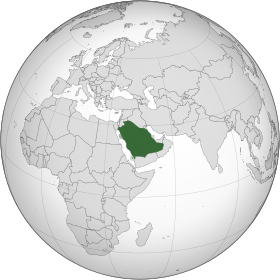
Saudi Civil Servants Survey

2.Abstract 


Dear Participant,
 
We are currently finalizing a book title “ Saudi Arabia Transformation: Uncertainty and Sustainability” with Professor Paul Joyce about Saudi Arabia’s long-term transformation in line with the long-term vision for the country, Vision 2030.

This book will focus on public administration’s role in the transformation process published by Routledge and the University of California Los Angeles (UCLA).  
 
The following survey aims to gauge Saudi opinion on Saudi Arabia’s Transformation.
 
Your participation is very important in order to achieve the aims and objectives of the book.  We understand that you are very busy, and we thank you in advance for taking the time to fill out this survey and for giving it your consideration.
 
The survey should only take 10 minutes to complete. 

Please answer the questions in the spaces provided.  Any additional comments or suggestions would be gratefully received. 

Please be reassured that all responses will be completely anonymous.
 
Thank you for your help
 
 
1.What is your position in the Saudi civil service? Please select one
2.How long have you worked in the Saudi civil service?
3.What is your gender?
4.How satisfied are you with your life as a civil servant?
5.
Vision 2030 is a well understood long-term strategic vision for the country among members of the Saudi civil service.

Please select statements on scale

1 = Complete Disagreement
10 = Complete  Agreement.
e.g. 8 = would show strong but not complete agreement. 2 or 3 show some level of disagreement
6.Vision 2030 has increased inter-ministry coordination and collaboration by civil servants.
7.Because of Vision 2030’s implementation, coordination and collaboration has generally increased within the civil service.
8.The Saudi civil service has become more “Agile because of Vision 2030.
(We are defining agile as being able to react quickly and intelligently.)
9.The civil service has improved its capacity for the delivery of reforms and new developments because of Vision 2030.
10.Vision 2030 has caused the civil service to strengthen processes for monitoring and evaluation of implementation of changes and projects.
11.Vision 2030 has caused an improvement in the civil service’s capacity to evaluate and learn from experience.
12.The work and actions of the Saudi civil service is strongly aligned with Vision 2030.
13.The delivery of Vision 2030 is strongly supported by stakeholders external to government (businesses, NGOs, etc.).
14.The civil service has the capacity to encourage public and private stakeholders to work towards Saudi’s Vision 2030 though, for example, tax and financial incentives, etc.
15.The delivery of Vision 2030 is strongly supported by ordinary citizens.
16.Vision 2030 has already brought about increases in human development and human capital within Saudi Arabia.
17.Vision 2030 has caused Saudi Arabia to make faster progress towards a better economy.
18.Vision 2030 has caused Saudi Arabia to make faster progress towards improved public services.
19.Vision 2030 has caused Saudi Arabia to make faster progress towards better social outcomes for society.
20.Vision 2030 has caused Saudi Arabia to make faster progress towards better environmental performance for society.
21.The Saudi civil service proactively seeks to anticipate and respond to the changing needs of Saudi citizens.
22.The Saudi civil service proactively seeks to anticipate and respond to changing needs of external stakeholders (businesses, NGOs, etc.).
23.Informed by our government’s purpose, all civil servants have a good understanding of the future direction we are taking.
24.The civil service’s activities are strongly driven by data including data used for identification of needs, solution design, delivery, and evaluation of services.
25.Strategic decision-making is always based on data and carried out in consultation with a diversity of experts, practitioners, and end-users.
26.Leaders (ministers and senior civil servants) inspire and support the civil service to pursue and realise opportunity in the face of adversity.
27.Ideas and suggestions made by civil servants to leaders and civil service managers are listened to, considered, and evaluated.
28.The civil service has a culture where people with a diverse range of skills and opinions are available at short notice to help problem solve.
29.The civil service has, or is able to quickly source, the required data, information and intelligence for our decision-making.
30.We are committed to designing and delivering public services in new ways.
31.Individuals and teams in the civil service have the autonomy to design and deliver their own solutions, and improvements, to problems.
32.The civil service is able to quickly allocate budget and resources to initiatives that have been identified as priorities.
33.The civil service is effective at continually developing civil service skills and capabilities to meet the evolving needs of citizens and users.
34.The civil service approach to testing, filtering, and refining possible solutions means that we can continually develop public services towards optimal outcomes.
35.Experimentation is made possible, and proactively encouraged, across the civil service.
36.We have a cyclical process for improving public services, which takes account of citizen and end-user feedback.
37.The civil service is committed to constantly adapting policies and services based on learning from successes and failures.
38.The Saudi civil service is very good at adapting rapidly to meet changes in citizen and end-user needs.
39.There are good training and development opportunities available to become a more effective leader.
40.39 Based on my experience, the best vehicles for developing more effective leaders in the civil service are coaching and mentoring.
41.Based on my experience, the best vehicle for developing more effective leaders in the civil service is action learning.
42.There is a need for the civil service to offer more short courses and workshops focused on leadership development.
43.Leaders develop themselves though reflection on their experiences about what works and what does not work.
44.Leaders of the civil service inspire us to move at pace towards a common, shared purpose.
45.Leaders of the civil service enable the civil service to learn and adapt when faced by complex problems.
46.Leaders of the civil service are ِ Agile leaders.
(We are defining agile as being able to react quickly and intelligently.)
47.I am an agile leader.
48.Leaders in the civil service need to become more aware of the principles for agile leadership.
49.
Optional Information
If you have any questions or would like further information, please do not hesitate to contact us.

Dr. Turki Faisal Al Rasheed/Professor Paul Joyce
Adjunct Professor 
Department of Agricultural and Biosystems Engineering (ABE)
College of Agriculture and Life Sciences (CALS)
The University of Arizona

E-mail: tfrasheed@arizona.edu
paulcmjoyce@gmail.com

Mobile +1520 2222 007 (Whatsapp only)