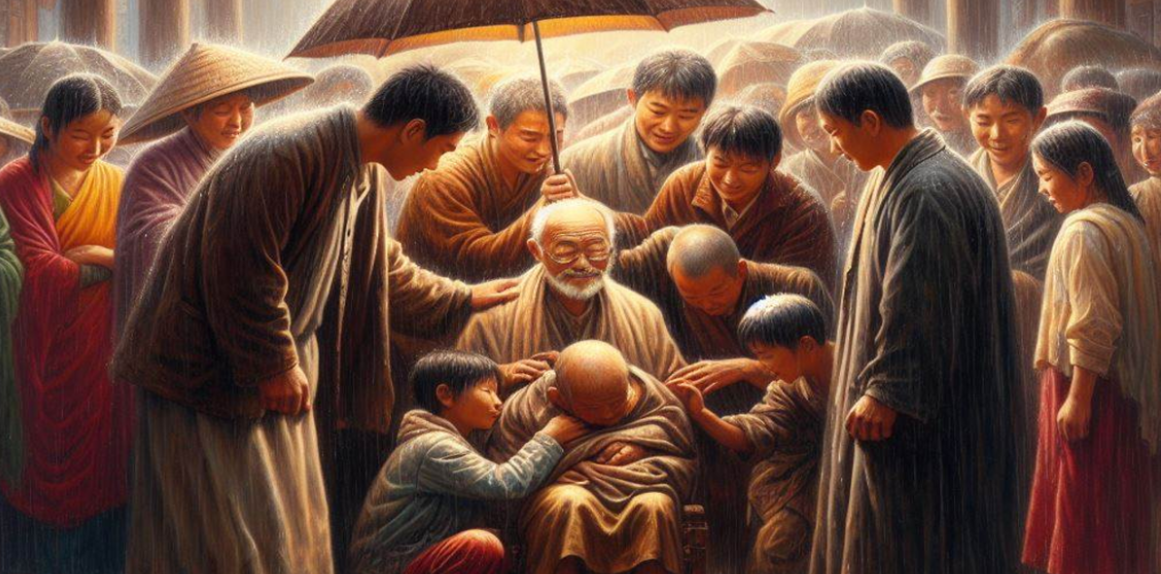
A Compassionate Community is a community of people who are passionate and committed to improving the experiences of those living with a serious illness, experiencing trauma or social isolation, caregiving, dying and grieving. A Compassionate Community takes an active role in caring for people, assists people to live comfortably in their homes, connects people to supports, raises awareness about issues, and builds supportive networks in the community.

We are looking forward to having you attend Drew University's 2024 Spring Symposium. We hope through this anonymous survey you will evaluate the community that you live in and define what a compassionate community means to you.
Thank you

Question Title

* 1.
How important is it for you to live in a compassionate community?

Not important at all Extremely important
Clear
i We adjusted the number you entered based on the slider’s scale.
EVALUATE YOUR COMMUNITY
In the following sections, please check the box corresponding to your perception of each statement in YOUR OWN COMMUNITY:

Question Title

* 2. AWARENESS AND ADVOCACY

  Strongly Disagree Disagree Neutral Agree Strongly Agree
The health care professionals I know in my community are aware of existing community support services and recognize their work as an important component of holistic care.
In my community, there is a strong coordinated voice that advocates for and supports the idea of creating a compassionate  Community.

Question Title

* 3. ATTITUDES AND COMMITMENT

  Strongly Disagree Disagree Neutral Agree Strongly Agree
People in my community support each
other practically during experiences of
serious illness, trauma, or when dealing with grief.
My community engages health care
professionals, the municipality, other
leader organizations and volunteer
groups to develop home-grown
solutions to help those in need for
support and socially isolated.

Question Title

* 4. LEADERSHIP AND CAPACITY

  Strongly Disagree Disagree Neutral Agree Strongly Agree
There are community organizations (e.g. non for profits that work with seniors, aging, chronic diseases, those experiencing trauma or social isolation,  the municipality, faith communities, etc.) that support or work collaboratively to create a compassionate community.

Question Title

* 5. NETWORKS AND CONNECTIONS

  Strongly Disagree Disagree Neutral Agree Strongly Agree
People in my community know how
to find and access support services
when needed.
Overall, my community has strong
social circles and networks of support.

Question Title

* 6. OPPORTUNITIES AND RECOGNITION

  Strongly Disagree Disagree Neutral Agree Strongly Agree
There are people in my community who
are actively exploring partnerships with
other compassion-based initiatives such
age-friendly communities, dementia friendly
communities and programs that
support homeless people.
HOW YOU DEFINE A COMPASSIONATE COMMUNITY
Imagine yourself living in a compassionate community. What would it look like? What would it provide for its citizens? What would the quality of life be like?

Question Title

* 7. What are 3 words/concepts that you would use to define a Compassionate Community?

Question Title

* 8. What are 3 significant challenges or barriers you feel prevent the development of a Compassionate Community?

Question Title

* 9. Any additional comments are welcomed here

Thank you for taking the time to participate in this survey . We are hoping to share some of the results during the symposium and a full report afterwards.
This survey  is based on the index developed by the BC Center for Palliative Care and Kalein Centre

Question Title

Image

T