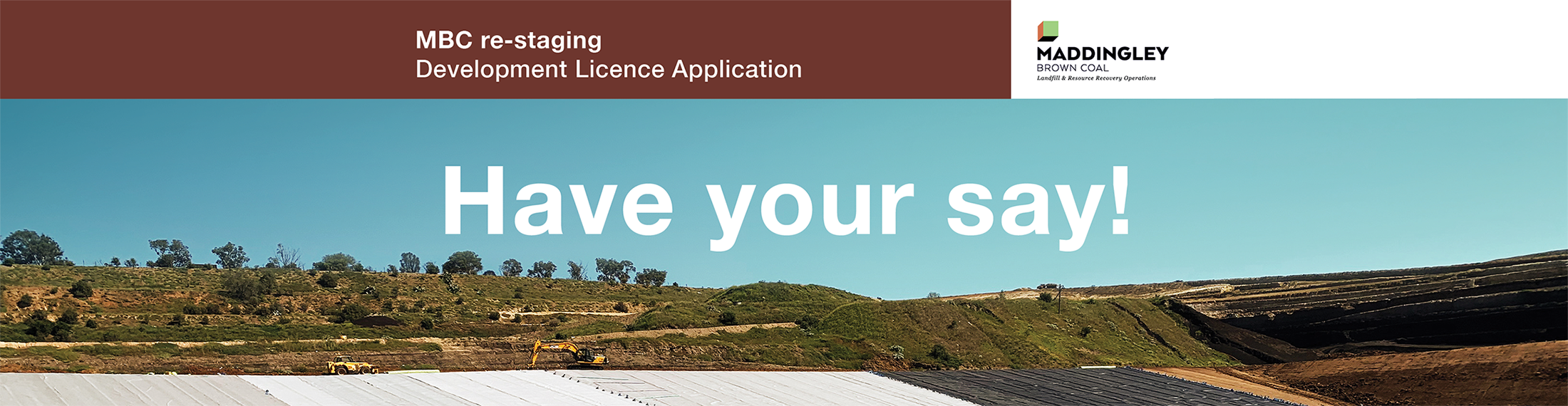
The application is for continued landfill operations within the site's existing planning-approved footprint. and does not propose any new landfill area outside of this approved footprint.
As part of the proposal, MBC will also restage its landfill cells to apply modern environmental controls to Stage 1, the oldest part of the landfill on site. The site contains three stages, each with a number of cells. Stage 1 has been filled to capacity and rehabilitated with vegetation, and MBC is currently accepting waste in Stage 2. The current EPA-approved staging is to construct and fill all cells in Stage 2 before moving to Stage 3. MBC now proposes to change the order in which it fills the cells, constructing and filling Stage 3 earlier than anticipated. This is a change to the original staging approved in 2012. Stage 3 covers approximately 4.1 million cubic metres of airspace, located in the southwest corner of the site, and is currently an empty mine void.
The proposed change to the filling sequence does not involve any expansion of the overall planning-approved landfill footprint, and does not change any existing approved waste streams, waste volumes or truck movements. It aims to improve rehabilitation timing, groundwater protection, and operational efficiency.
What is being proposed
The proposed scope of works for Stage 3 includes:
• Building three new landfill cells (Cells 9, 10 and 11), each lined with several protective layers – a thick compacted clay barrier, a synthetic clay liner, a heavy-duty plastic membrane and a drainage system – to collect and safely manage leachate (liquid that drains through waste).
• Building a connecting liner between the new cells and the existing (already-capped) western edge of Stage 1, to tie the two areas together and manage drainage.
• Capping and revegetating the cells once full, using a soil-based "phytocap" system built to EPA standards, then planting the same native vegetation used across the rest of the site.
• Building new stormwater infrastructure, likely including a new stormwater dam west of the Stage 3 cells, along with pipes, pumps and drains to direct rainwater safely to the new dam, a sediment basin, and the site's existing Irrigation Dam.
• Using existing site infrastructure, leachate ponds and the on-site gas flare already in place, rather than building new systems, to manage leachate and landfill gas.
Some aspects of the project are fixed (e.g., site location), while others can be influenced by community feedback, such as landscaping options, local road upgrades, monitoring and reporting preferences, and community benefits.
Thank you for you time to complete the survey below.